
Last updated November 14, 2026
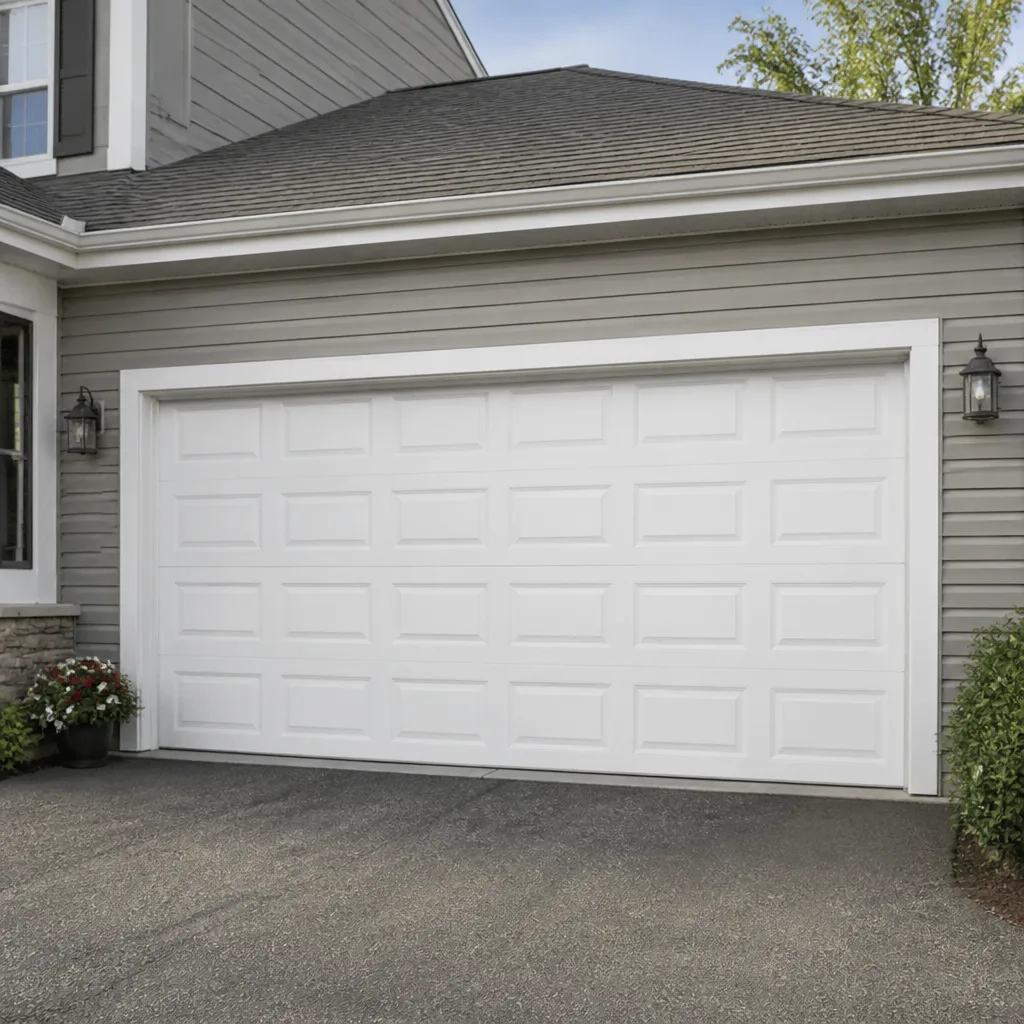 Raised-panel steel
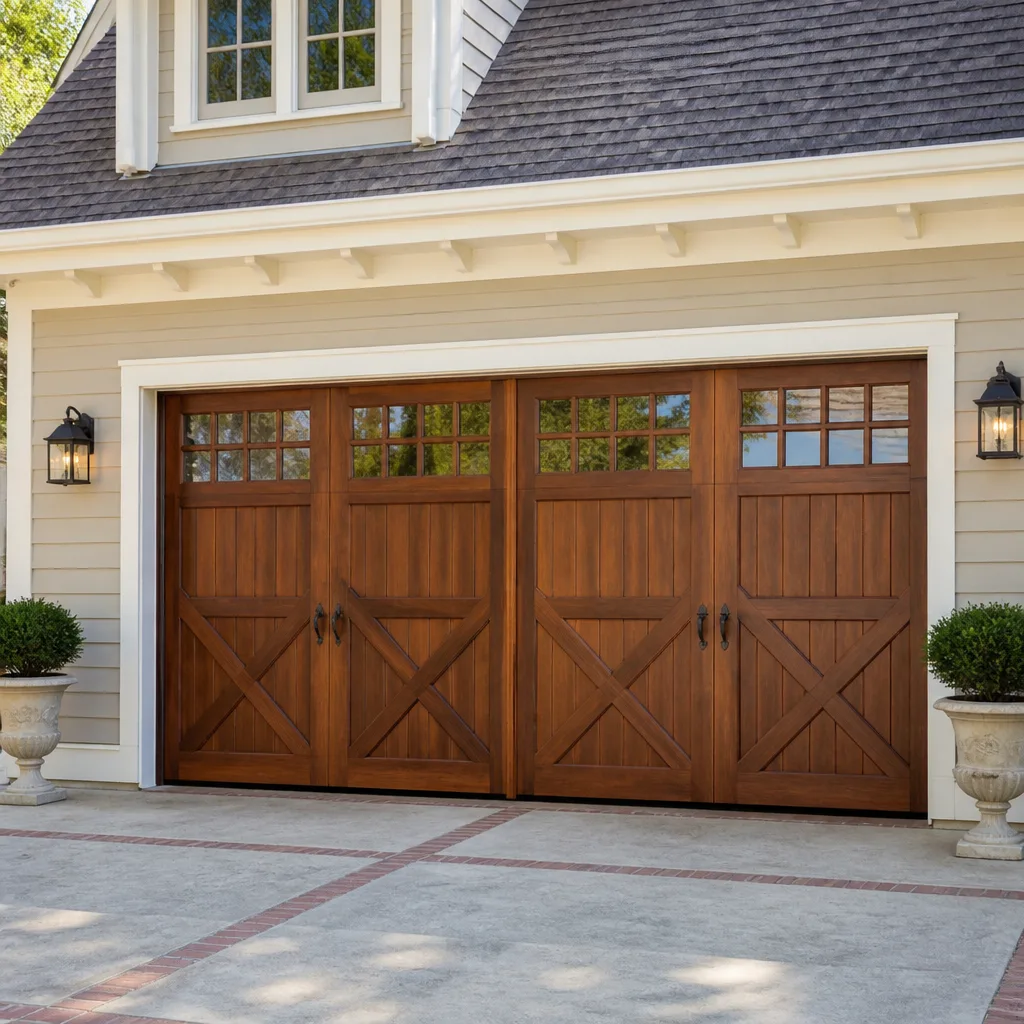 Carriage house
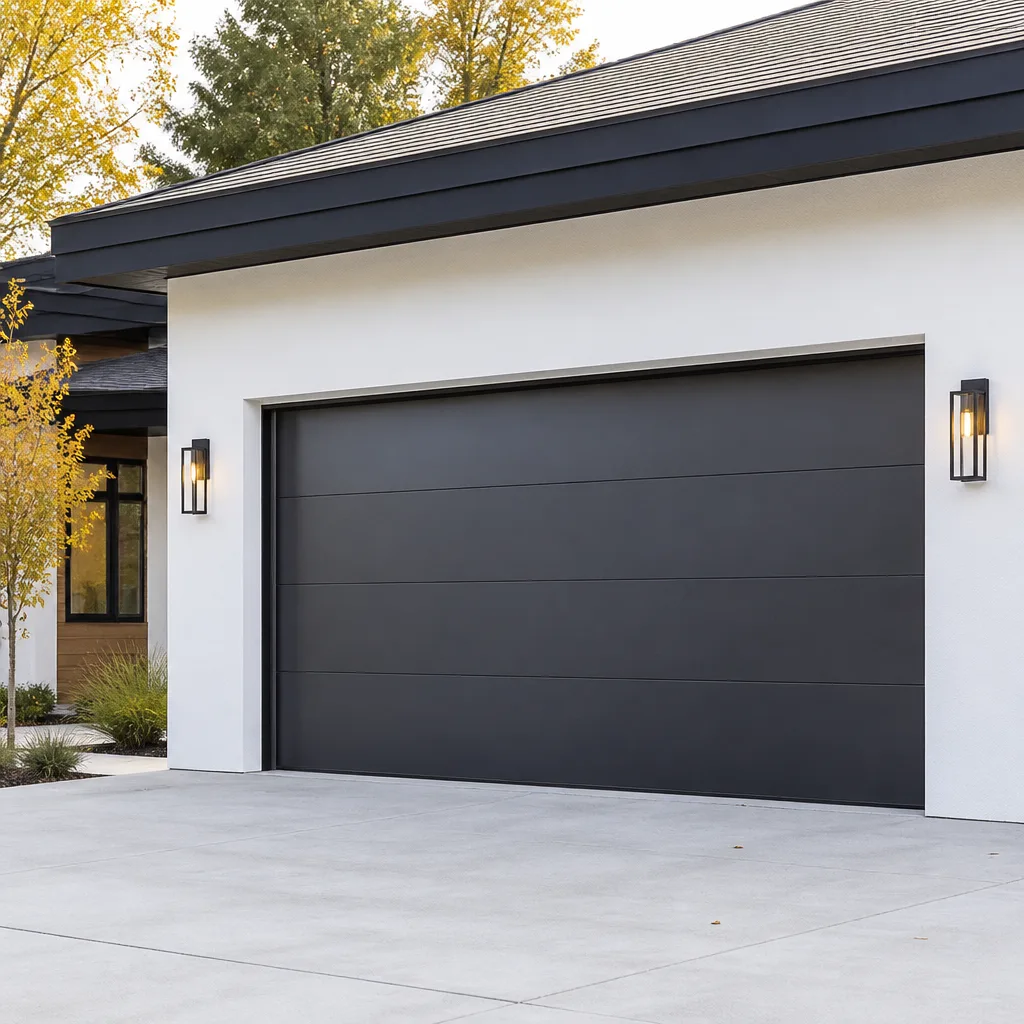 Modern flush
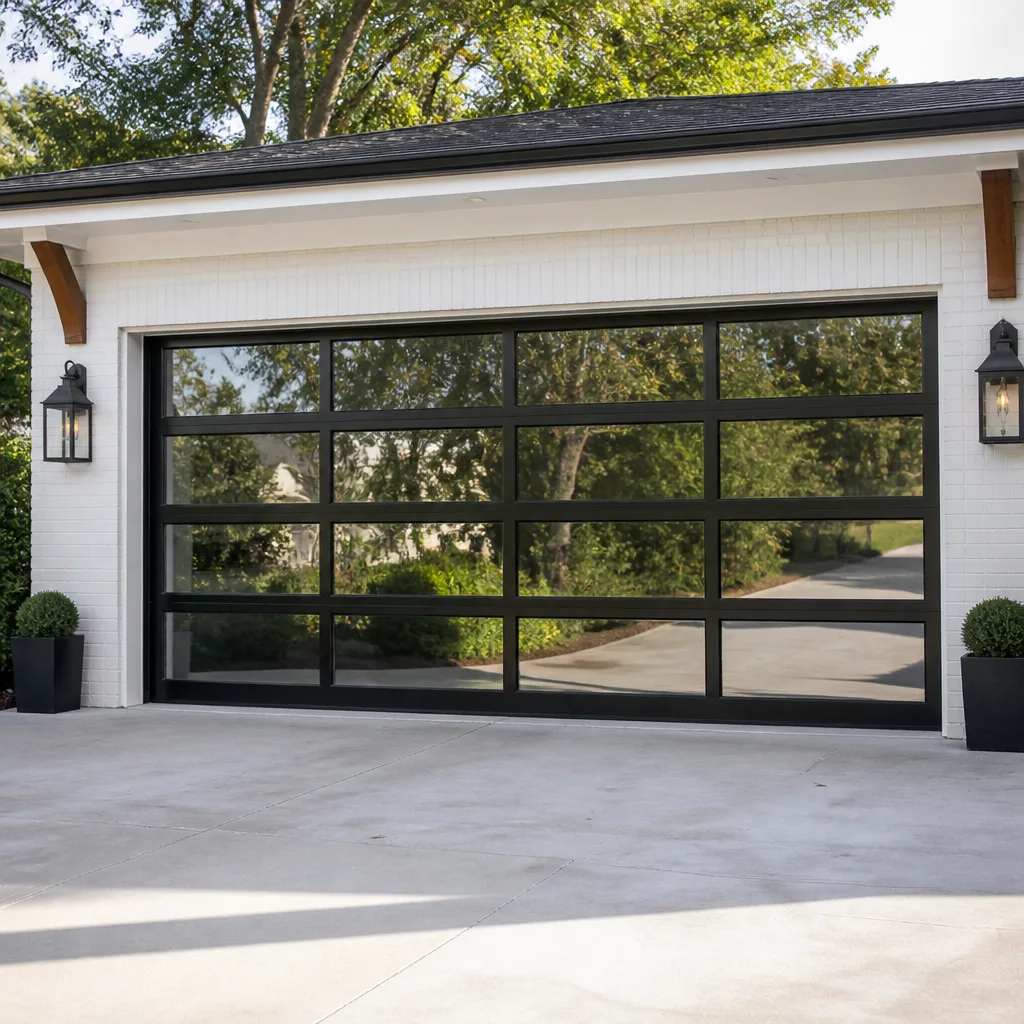 Full-view glass
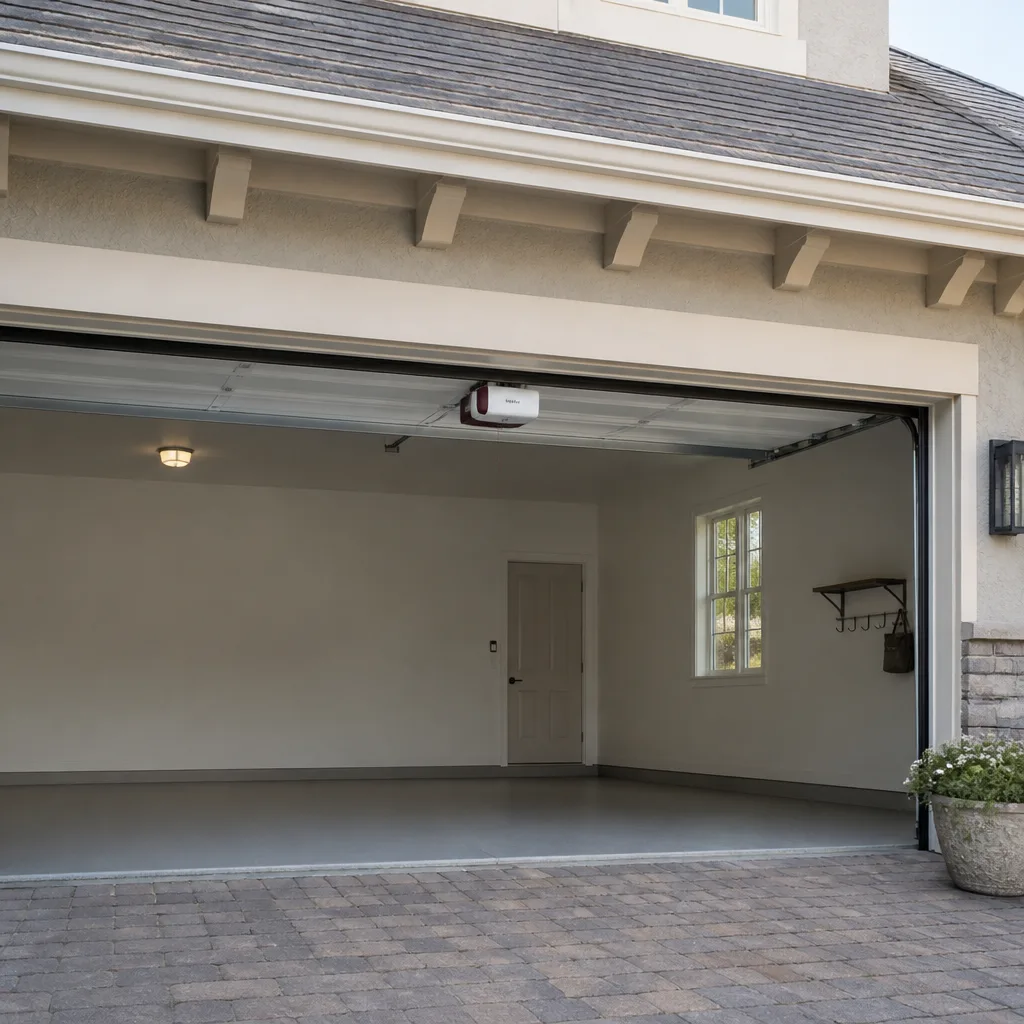 LiftMaster openers
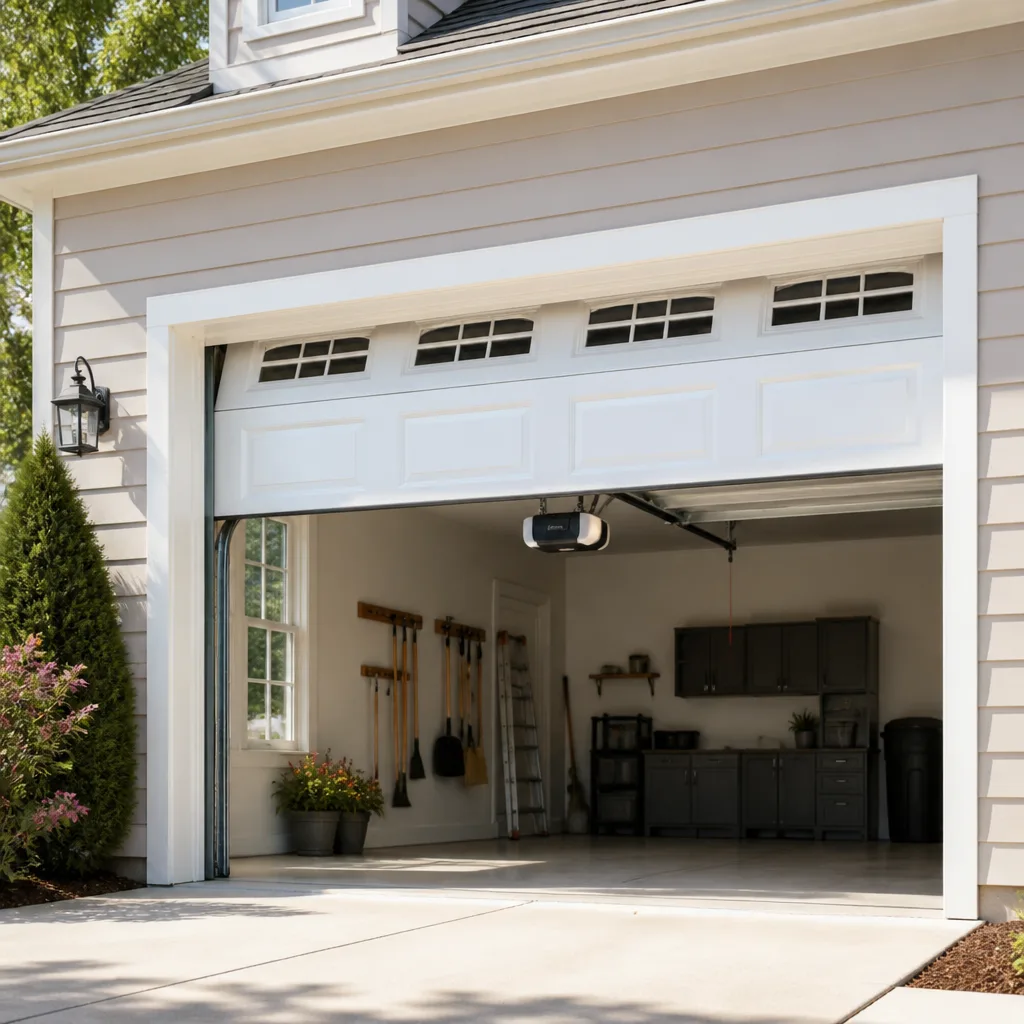 Chamberlain openers
Full 25-point door and opener safety check with every visit - springs, cables, rollers, tracks, and your LiftMaster or Chamberlain opener included
You get a price before we start. It does not change when the truck arrives.
Get your free estimateGarage Door Emergency Preparedness Guide for Salinas Homes
Most homeowners think a garage door emergency is about inconvenience. It isn’t. In Salinas, a door that fails closed can strand your only vehicle, leave a house open to the street, or block the path you’d count on in a fire. And the failure usually comes without warning: a spring lets go, an opener quits, the power drops during a storm. The homeowners who come through it calmly aren’t luckier than everyone else. They wrote a few things down and learned one procedure before they needed it. This guide walks through the manual release, the battery-backup question, the first 30 minutes of a door stuck open, and how to tell a true emergency from a morning problem. If you live in Salinas, the specifics here are built for the homes and climate around you.
Quick Answer
A garage door emergency in Salinas comes down to two questions: can you still get your car out, and is the house still secure? Learn the manual release with the door closed on a calm afternoon, keep the model numbers and our number posted in the garage, and know that “stuck open” is the real emergency while “stuck closed” is usually an access problem you can plan around. A broken spring, a door off its track, or a door that fails open warrants a professional call. Call (844) 482-7563. We answer 24/7. Fast dispatch from 7am to 7pm, Sunday through Friday.
Styles & brands we work with
- Raised-panel steel
- Carriage house
- Modern flush
- Full-view glass
- LiftMaster openers
- Chamberlain openers
Table of Contents
- How Do You Manually Release a Garage Door Safely?
- Cable-Drive vs. Belt-Drive Openers in Salinas Homes
- What to Do When the Door Fails Open
- Power Outage Protocol: How to Open Your Door With No Power
- Emergency or Wait Until Morning? A Decision Guide
- The Emergency Information Card to Post in Your Garage
- Why Salinas Homes Face Specific Garage Door Risks
- Preventive Checks That Prevent Most Emergencies
How Do You Manually Release a Garage Door Safely?
You pull the release cord and lift. That’s the version most people have heard, and it’s the version that sends people to the emergency room. A sectional garage door is heavy, its springs are under tension, and once you disengage the opener the door is dead weight in your hands. The release isn’t the hard part. Doing it without a door crashing down on you or a spring letting go is.
Here’s how a trained technician thinks through the manual release on a typical Salinas home:
- Clear the doorway first. Nothing and no one under the door. Move the car back away from it if the door is closed.
- Push the door slightly upward before pulling the cord. Take the tension off the opener’s rail so the release disengages cleanly instead of snapping.
- Pull the release cord straight down and toward the door. It hangs from the trolley on the opener rail. On a Chamberlain or LiftMaster unit it’s usually the short red or red-tipped handle.
- Hold the door, don’t let go. With the opener disengaged, the door stays where you put it only if the balance is intact. If it drops when you let it go, the springs are weak or broken. Stop.
- Lift using both hands, at the center of the bottom section. Raise it fully to the open position and let the door rest there.
If the door won’t budge, won’t stay up, or a spring is visibly snapped, do not force it. Call a technician. Call (844) 482-7563. We answer 24/7. A call outside dispatch hours is booked into the next opening, Sunday through Friday, 7am to 7pm.
Cable-Drive vs. Belt-Drive Openers in Salinas Homes
The release procedure is the same on every opener. What changes is how gently the opener lets go and how the release feels in your hand, which is where a lot of Salinas homeowners get surprised.
Belt-drive openers (Genie and LiftMaster both make them, and they’re common in older Salinas homes near the downtown neighborhoods) run a steel-reinforced belt instead of a chain. They’re quiet, which is why they get installed under bedrooms. The tradeoff: belts stretch and can go slack over time. When you pull the release on a slack belt, the trolley can feel loose before it disengages.
Chain-drive and screw-drive openers are louder but simpler. The release is more positive, but the trolley can bind if the rail is dirty or dry. If the cord feels stuck, don’t yank. Push the door up a few inches, then try again.
Jackshaft (side-mount) openers mount on the wall beside the torsion bar instead of on the ceiling. These are what you’ll find on garages with high ceilings or where the ceiling-mounted opener was moved out of the way. There’s no ceiling release cord on these. The release is on the opener unit itself, and most homeowners have never looked for it. If you own one, find the manual release lever now and note it on your emergency card.
In our experience across Salinas, the homeowner who knows their opener’s type is the one who handles a failure without a panic. If you don’t know yours, look at the label on the motor housing. Whether your opener is a LiftMaster or a Genie, we know it. And if you’re not sure, garage door opener repair starts with a visit that includes confirming exactly what you have.
What to Do When the Door Fails Open
A door stuck closed is an access problem. A door stuck open is a security problem, and it’s the emergency most people don’t pre-plan for. Your home is standing open to the street, and until a technician arrives, you need to lock it down.
Here’s the first-30-minutes sequence we recommend:
- Don’t try to force the door down. If it stopped partway, something is bent, off-track, or a spring has failed. Forcing it can drop the door or make the damage worse.
- Block the opening from the inside. A vehicle parked sideways across the doorway, a heavy piece of furniture, or a pair of sawhorses will deter casual entry. Do not stand in the doorway while you do this.
- Move valuables out of sight of the opening. Anything visible from the street through the open door is a target.
- Lock the interior door into the house. The door between the garage and the living space should be closed and locked, not just shut.
- Call a technician and stay off the door. Call (844) 482-7563. We answer 24/7. Fast dispatch from 7am to 7pm, Sunday through Friday. If the call comes in outside dispatch hours, it’s booked into the next opening.
If the door is stuck open and it’s raining, a tarp across the opening will keep water off the slab. Salinas rain isn’t heavy, but pooling at the garage threshold can work its way into the wall framing over a slow afternoon. If the door is off its track and hanging, stay clear of the panels. That’s a hardware failure with spring tension still in play, and it’s not a job for a homeowner with a ladder.
Power Outage Protocol: How to Open Your Door With No Power
When the grid drops in Salinas, the first thing most people try is the wall button. Nothing happens. The second thing is the remote. Nothing. At that point, you have two options: use the manual release (covered above) or rely on a battery-backup opener if you have one.
Battery backup is built into a number of current openers, including many LiftMaster and Chamberlain models, and it’s increasingly standard on new installs. It keeps the opener working for a limited number of cycles during an outage. Whether yours has it comes down to the model. Check the label on the motor housing, or look for a battery compartment cover on the unit. If you’re not sure, that’s one more line for your emergency card.
If you don’t have battery backup:
- Use the manual release. Push the door up slightly, pull the cord, lift with both hands, and prop or fully open the door.
- Re-engage the opener when power returns. Pull the cord again or run the opener once so the trolley reconnects, then test the door with the wall button before you rely on the remote.
- Never leave the door disengaged. A door with the opener disconnected won’t lock when you close it. If the door is down and the opener is disengaged, the door can be lifted from outside.
If you’re considering a new opener with battery backup, that’s a normal conversation to have on a scheduled visit, not in the middle of an outage. garage door repair and installation can both involve opener replacement, and we’ll walk you through what fits your door.
Emergency or Wait Until Morning? A Decision Guide
The hardest call in a garage door failure is whether to ring a technician immediately or wait. The answer isn’t “always call.” It depends on what failed and who’s affected.
Call now. These are true emergencies:
- The door is stuck open and the house is exposed to the street.
- The door is off its track or hanging at an angle.
- A spring has visibly snapped or a cable has come loose and the door won’t stay up.
- The door is the only way out of the garage and someone is inside.
- The opener is making a grinding noise and the door won’t move at all.
You can wait. These are morning problems:
- The door is down and stays down, and the house is secure.
- The remote stopped working but the wall button still operates the door.
- The door is noisy or sluggish but moves fully open and closed.
- The light on the opener flickers or the safety sensors are misaligned.
If you’re unsure, call and describe what you’re seeing. Call (844) 482-7563. We answer 24/7. A call outside dispatch hours is booked into the next opening, Sunday through Friday, 7am to 7pm, and a technician can tell you whether it can wait. Never guess your way through a spring or cable failure. Those parts hold the weight of the door, and a wrong move with either one can cause serious injury.
The Emergency Information Card to Post in Your Garage
Here’s the preparedness step almost nobody takes: write it down while you’re calm. During a failure, you’re not going to remember the model number, and you’re not going to want to climb a ladder to find it.
Make a card, index card or laminated sheet, and tape it inside the garage near the interior door or the opener. Write:
- Opener brand and model number. LiftMaster, Chamberlain, Genie, Craftsman, Raynor. The label is on the motor housing.
- Door brand and style. Clopay, Amarr, Wayne Dalton. The label is usually inside the door panels or on the bottom section.
- Manual release location. Ceiling trolley, wall-mounted jackshaft, or both.
- Battery backup y/n. Does your opener have it?
- Technician contact. Fletcher Garage Door Repair, (844) 482-7563. We answer 24/7. Fast dispatch from 7am to 7pm, Sunday through Friday.
- Emergency contact. A neighbor or family member who can help move a car or stand watch.
That card converts a stressful failure into a two-minute phone call. It’s the single cheapest preparedness move in this guide. And it’s the kind of thing that makes a technician’s first visit faster too. Whether your opener is a LiftMaster or a Genie, we know it and we’ll be able to tell you what you have before we arrive.
Why Salinas Homes Face Specific Garage Door Risks
Salinas sits in a valley with warm, dry summers and mild, wet winters. That climate shapes what fails and when. Springs, cables, and opener belts all cycle through expansion and contraction with the seasons, and a door that ran fine in July can feel stiff by December. Wooden door sections can swell in the wet months and stick at the weather seal. Metal components near the coast side of town see more surface wear, though we don’t see the kind of salt corrosion that beach-front homes get.
Salinas housing stock matters too. A lot of homes around the Alisal and the neighborhoods south of downtown have older single-car or two-car garages with doors and openers that are original to the house. Those systems are more likely to fail suddenly than newer equipment. If your door is more than 15 years old, the springs are likely near the end of their service life. That’s not a scare tactic. It’s just how springs work.
And here’s a local fact worth knowing: the valley’s summer heat and dry air can make a torsion spring more brittle over time, while the wet season puts stress on the door’s balance. A door that’s out of balance asks more of the opener, and the opener is what usually quits first. If you’re in Salinas and your opener is struggling, garage door opener repair starts with checking the door, not just the motor.
If your door needs help right now, call (844) 482-7563. We answer 24/7. Fast dispatch from 7am to 7pm, Sunday through Friday.
Preventive Checks That Prevent Most Emergencies
The majority of garage door emergencies we see in Salinas didn’t come out of nowhere. They came from a small problem that went unchecked for a few months. A short seasonal check catches most of them before they strand you.
Do these checks from the ground. Don’t climb a ladder to reach the springs or cables. That’s the safety line.
- Test the balance. Disengage the opener, lift the door halfway, and let go. A balanced door holds in place. If it drops, the springs are weak and should be looked at.
- Watch the full cycle. Open and close the door and watch it. Any jerk, jump, or grind points to a track, roller, or spring issue.
- Look for spring or cable damage. A gap in the torsion spring, a frayed cable, or a cable off its drum is a stop-and-call situation.
- Check the safety sensors. The two small lenses near the floor should have a steady light, not a blinking one. Wipe them with a dry cloth.
- Lubricate the moving parts. Rollers, hinges, and the opener rail. Don’t lubricate the springs themselves unless your opener’s manual tells you to.
- Test the manual release. Once a year, in good weather, run through the release step so you know how it feels. That’s the one action that matters most in an emergency.
If a check turns up something you don’t want to diagnose yourself, that’s what we’re here for. Free estimates in Salinas, and the price is quoted and agreed before any work starts. If you’re not sure which brand door you have, garage door repair includes a full assessment on the first visit.
Common Mistakes to Avoid
- Pulling the manual release without holding the door. The release takes the opener’s weight off, but the door’s own weight doesn’t leave. A door with weak springs drops the moment you let go. Hold it with both hands before you disengage.
- Forcing a stuck door down. If a door fails open in a Salinas home, forcing it closed can bend a panel or pop a cable the wrong way. Block the opening from the inside and let a technician reset the door.
- Ignoring a broken spring. A visible gap in the spring is not a “wait and see” situation. The door may still lift if you help it, but the other spring, if there is one, is now carrying twice the load.
- Trying to adjust a spring or cable yourself. These parts store enough energy to break bones. There’s no safe homeowner version of this job. Call a trained technician.
- Assuming the remote is the problem. A remote that stops working is often the opener or a safety sensor, not the remote. Test the wall button before you replace anything.
- Relying on the opener to lift a heavy door. If the door feels heavy, the springs are losing tension. The opener will lift it for a while, then the opener itself fails. Fix the door, not just the motor.
- Not writing anything down. Model numbers, opener type, and technician contact saved on a card in the garage beat trying to find a label on a ladder in the dark.
See the difference
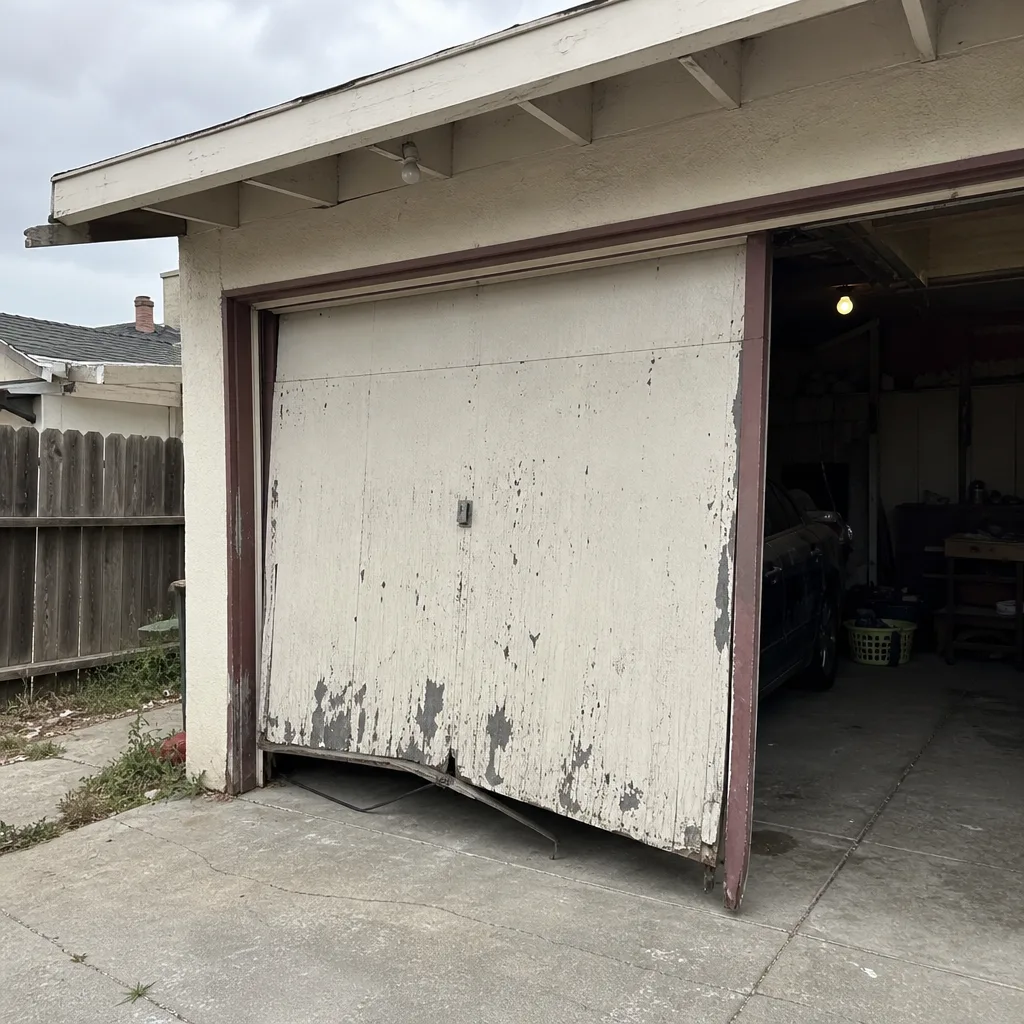 Before
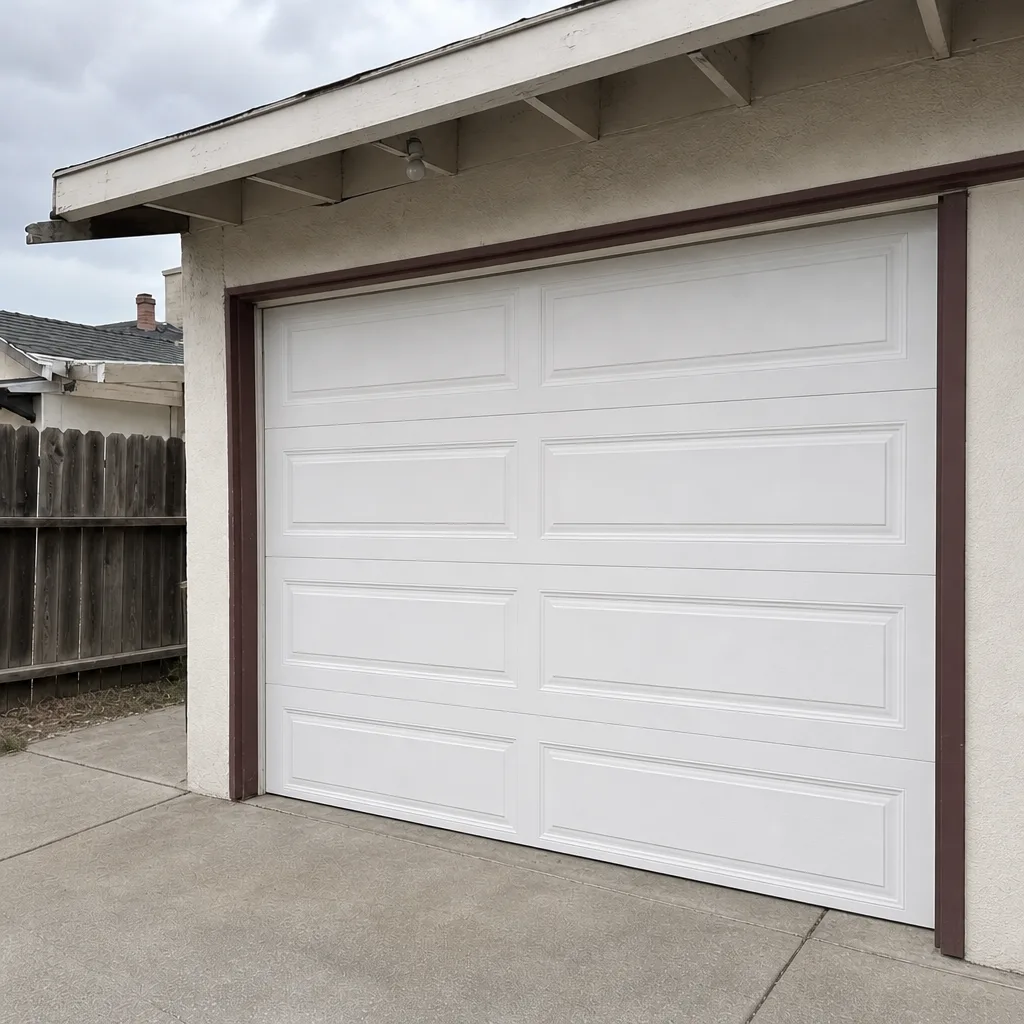 After
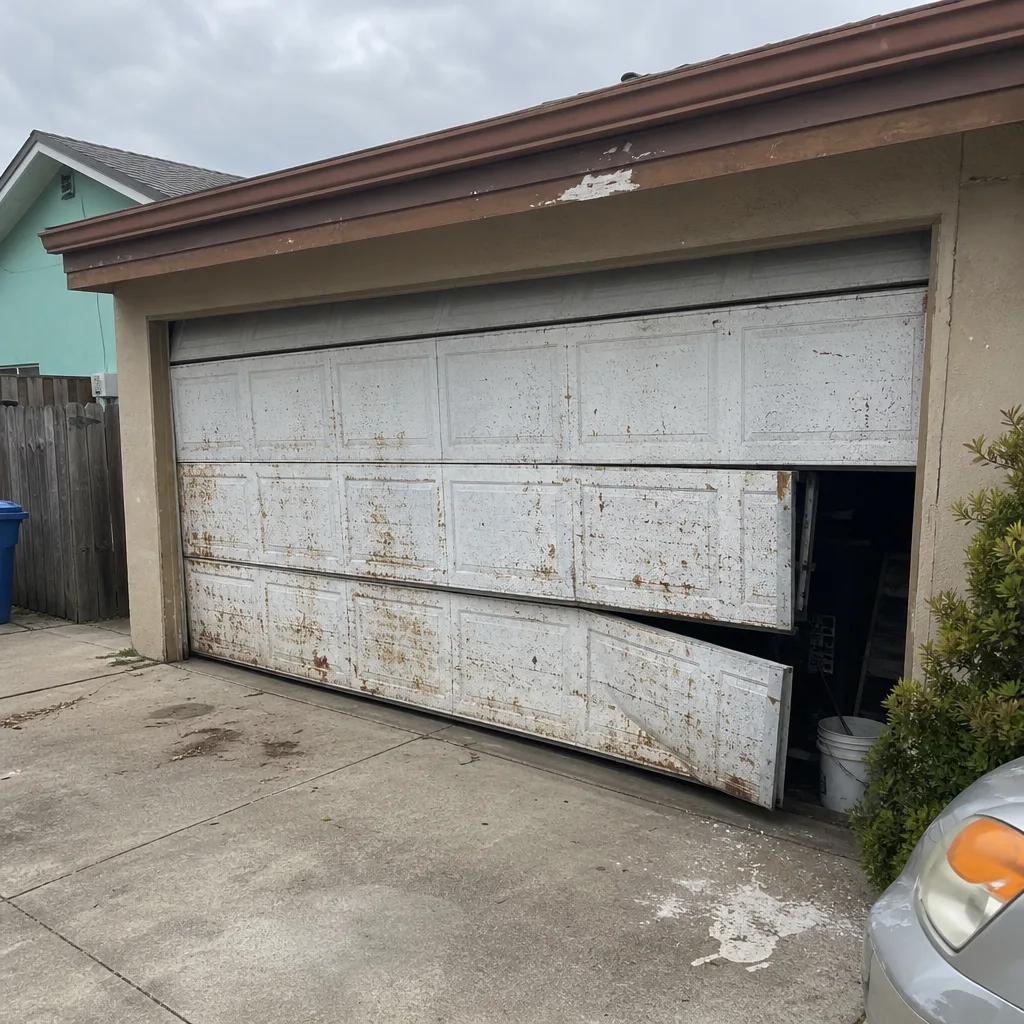 Before
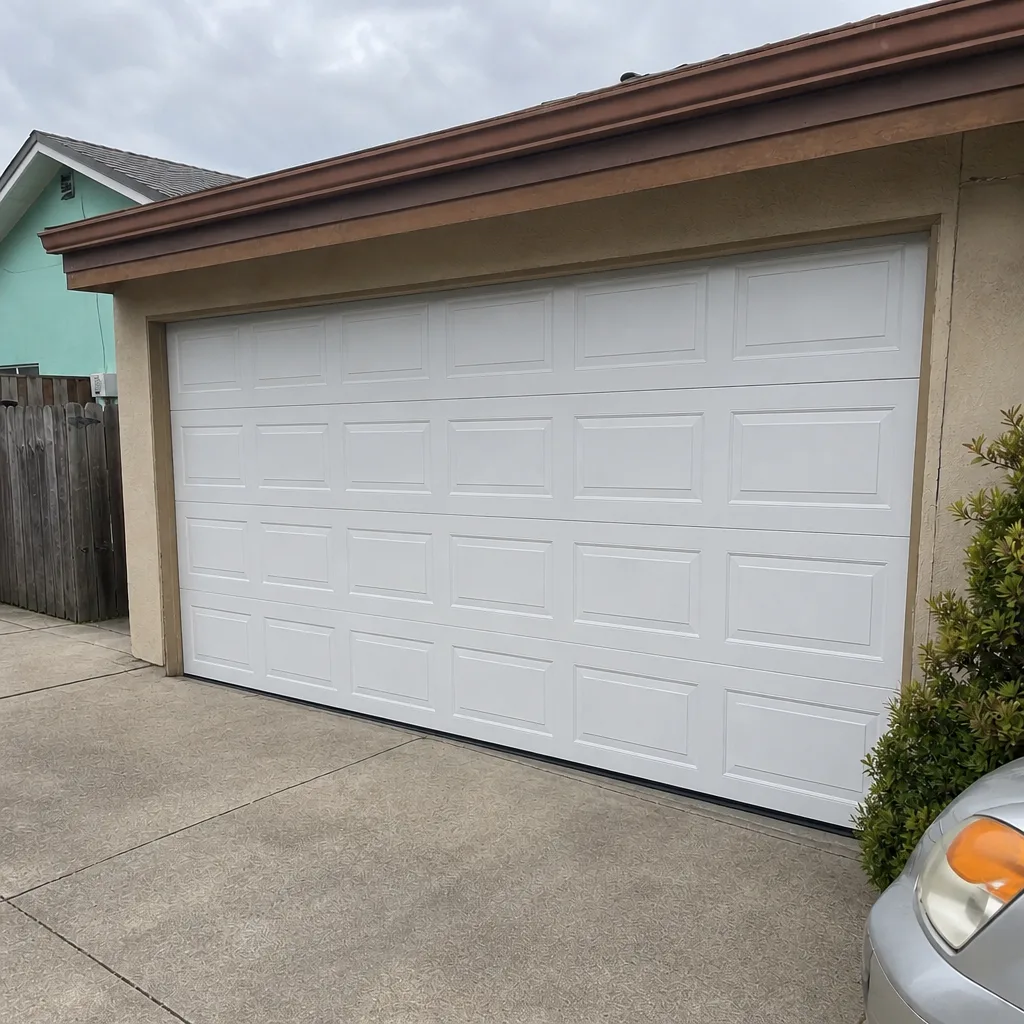 After
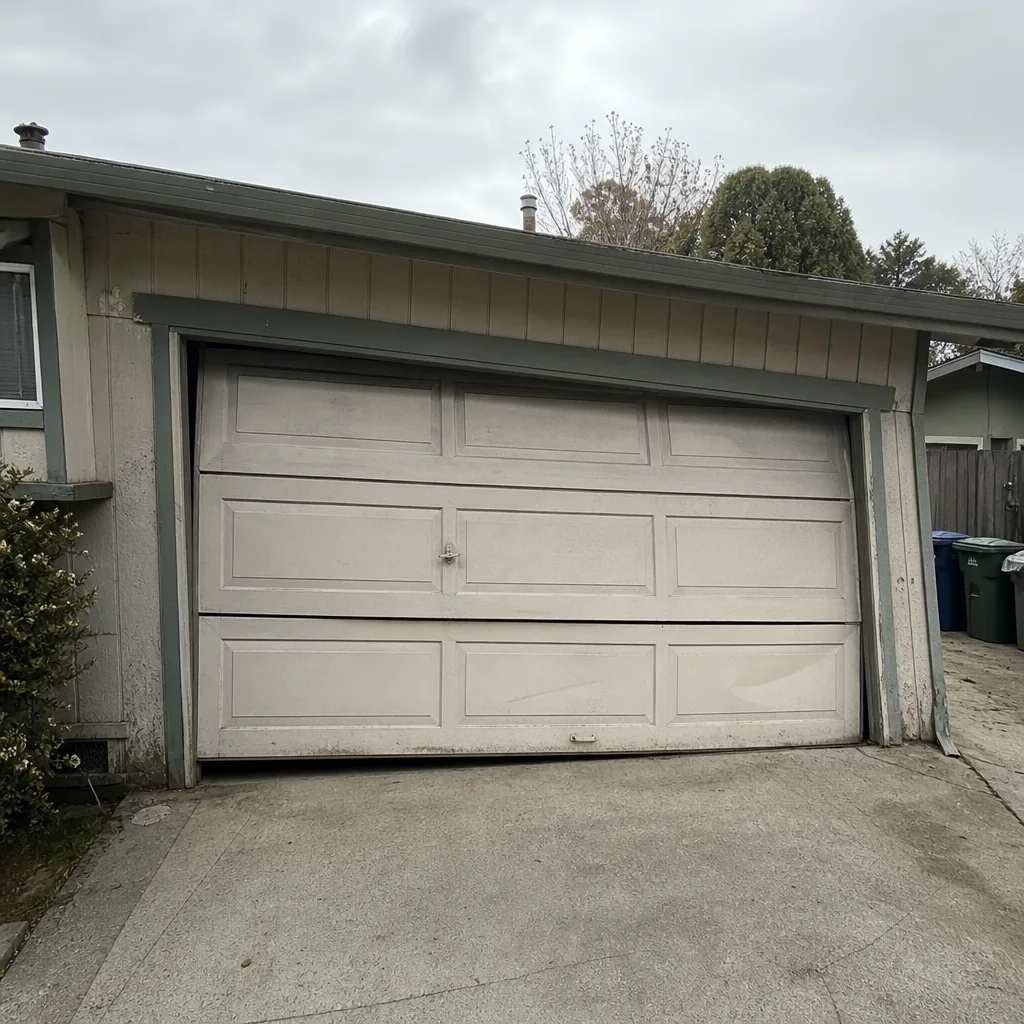 Before
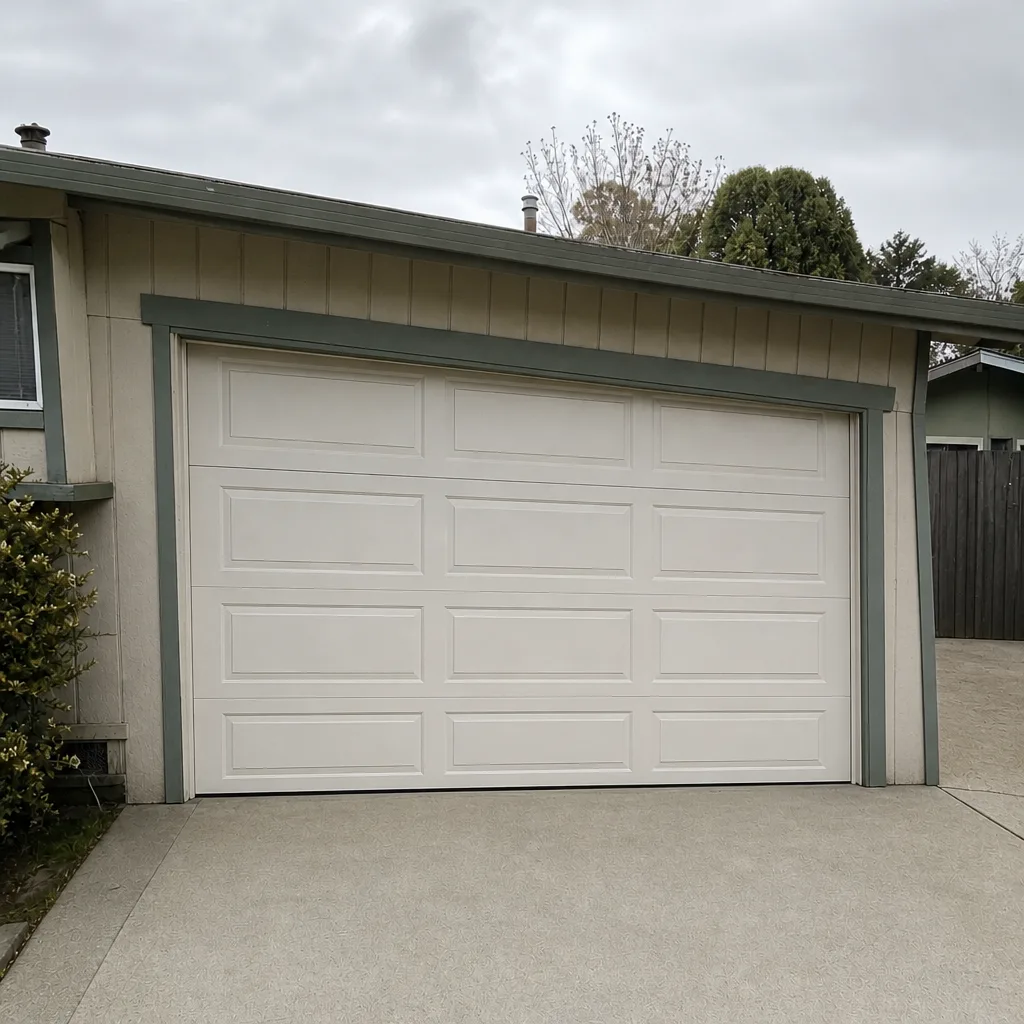 After
When to Call a Professional
Call a professional when the failure involves springs, cables, tracks, or a door that has moved out of position. Those are the parts that hold stored energy, and a wrong move can cause serious injury. Call a professional when the door is stuck open and the house is exposed, or when the only vehicle is trapped inside the garage. Call a professional when the door won’t balance, when the opener grinds or jumps, or when a brand you own is behaving in a way you don’t recognize. Fletcher Garage Door Repair offers free estimates in Salinas. Call (844) 482-7563. We answer 24/7. Fast dispatch from 7am to 7pm, Sunday through Friday, and the price is quoted and agreed before any work starts. We work on LiftMaster, Chamberlain, Genie, Clopay, Amarr, Wayne Dalton, Craftsman, and Raynor equipment. Whether your opener is a LiftMaster or a Genie, we know it.
Frequently Asked Questions
As long as you need, if you use the manual release correctly. The “six minutes” part isn’t a clock on the door; it’s about how long it takes to get it wrong without preparation. Learn the release in good weather, in daylight, before a failure. Push the door up slightly, pull the release cord, hold the door with both hands, lift from the center of the bottom section. If the door feels heavy or drops when you let go, stop and call a technician. Call (844) 482-7563. We answer 24/7.
Block the opening from the inside so the house isn’t exposed to the street. Park a car across the doorway or use heavy furniture, and lock the interior door into the house. Don’t try to force the door down. Then call (844) 482-7563. We answer 24/7. Fast dispatch from 7am to 7pm, Sunday through Friday. A door stuck open is the true emergency in this trade, and the first steps are about security, not the door itself.
It depends on the model. Many current LiftMaster and Chamberlain openers include it, and it’s common on newer installations. Check the label on the motor housing or look for a battery compartment on the unit. If you’re not sure, add it to your emergency card. If you don’t have battery backup, use the manual release and write down the procedure. If you’re thinking about a new opener with battery backup, that’s a scheduled visit, not an emergency call.
No, if you have a written estimate. We quote per job, we agree the price before any work starts, and the written estimate sets the final price. The estimate is free. Call (844) 482-7563. We answer 24/7.
Not always. If the door is down and stays down and the house is secure, it’s a morning problem you can schedule. It becomes an emergency if the door is open, off-track, or the only exit. A broken spring is never a homeowner repair. Those parts hold tension and can cause serious injury. Call a technician, and describe exactly what you see. Call (844) 482-7563. We answer 24/7.
Often, yes. Springs, cables, rollers, and common opener parts are standard stock for us, which is why same-day repair is possible on many failures. Some parts, particularly opener logic boards and specific door panels, have to be ordered to match your brand and model. Whether your opener is a LiftMaster or a Genie, we know it. Call (844) 482-7563 for an exact quote; estimates are free.
The Bottom Line
Preparedness in Salinas isn’t about predicting when your garage door will fail. It’s about knowing three things: how to use the manual release safely, whether your opener has battery backup, and who to call. A door that fails closed is an access problem you can plan around. A door that fails open is a security problem you need to handle in the first 30 minutes. Post an emergency card in the garage with your opener and door model numbers, the manual release location, and our number. Then do the yearly checks. That’s it. Most emergencies turn into a two-minute phone call instead of a bad morning.
If you’re in Salinas and your door is failing right now, garage door opener repair and garage door repair are one call. Fletcher Garage Door Repair handles LiftMaster, Chamberlain, Genie, Clopay, Amarr, Wayne Dalton, Craftsman, and Raynor. Whether your opener is a LiftMaster or a Genie, we know it. And if you’re not sure who to call, call us anyway. Salinas homeowners call us for free estimates. Call (844) 482-7563. We answer 24/7. Fast dispatch from 7am to 7pm, Sunday through Friday. If your call comes in outside dispatch hours, it’s booked into the next opening, and the price is quoted and agreed before any work starts.
Written by the team at Fletcher Garage Door Repair, serving Salinas since 2015.