
Last updated November 14, 2026
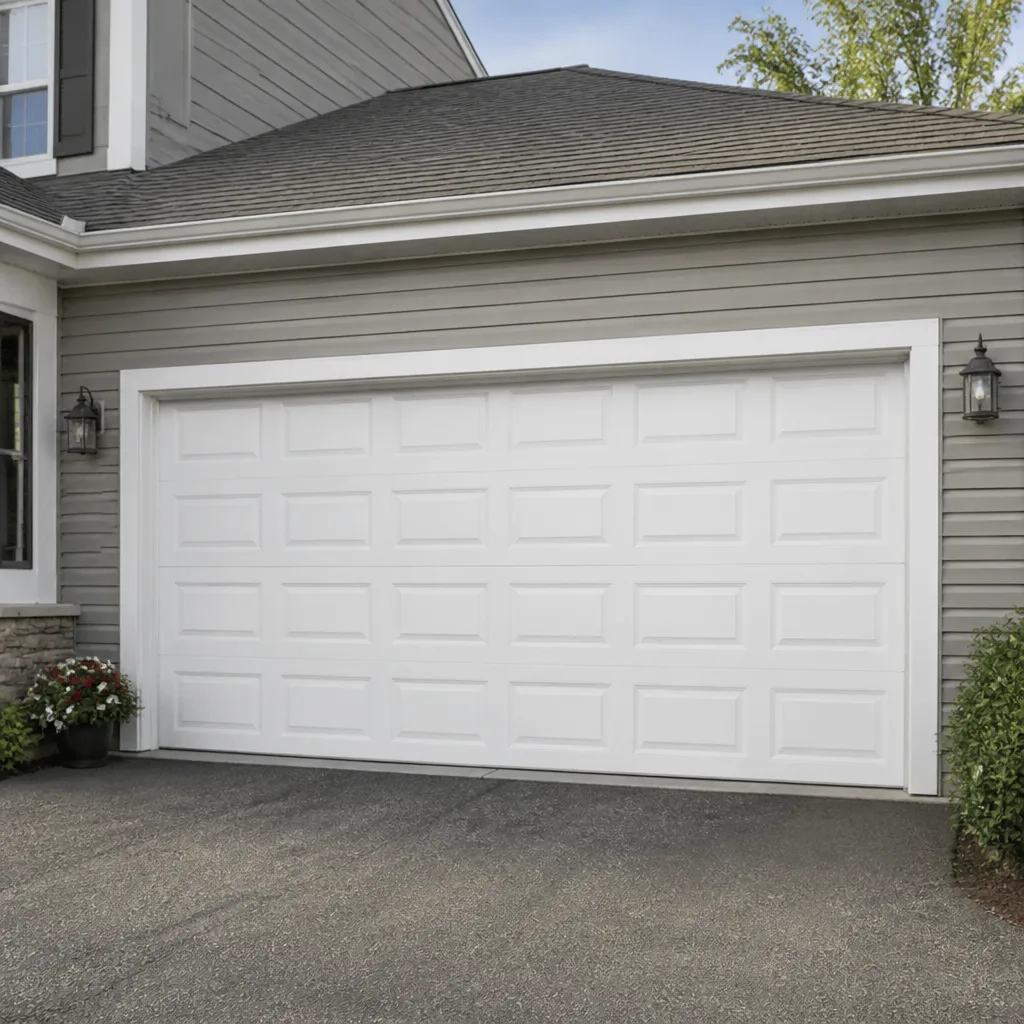 Raised-panel steel
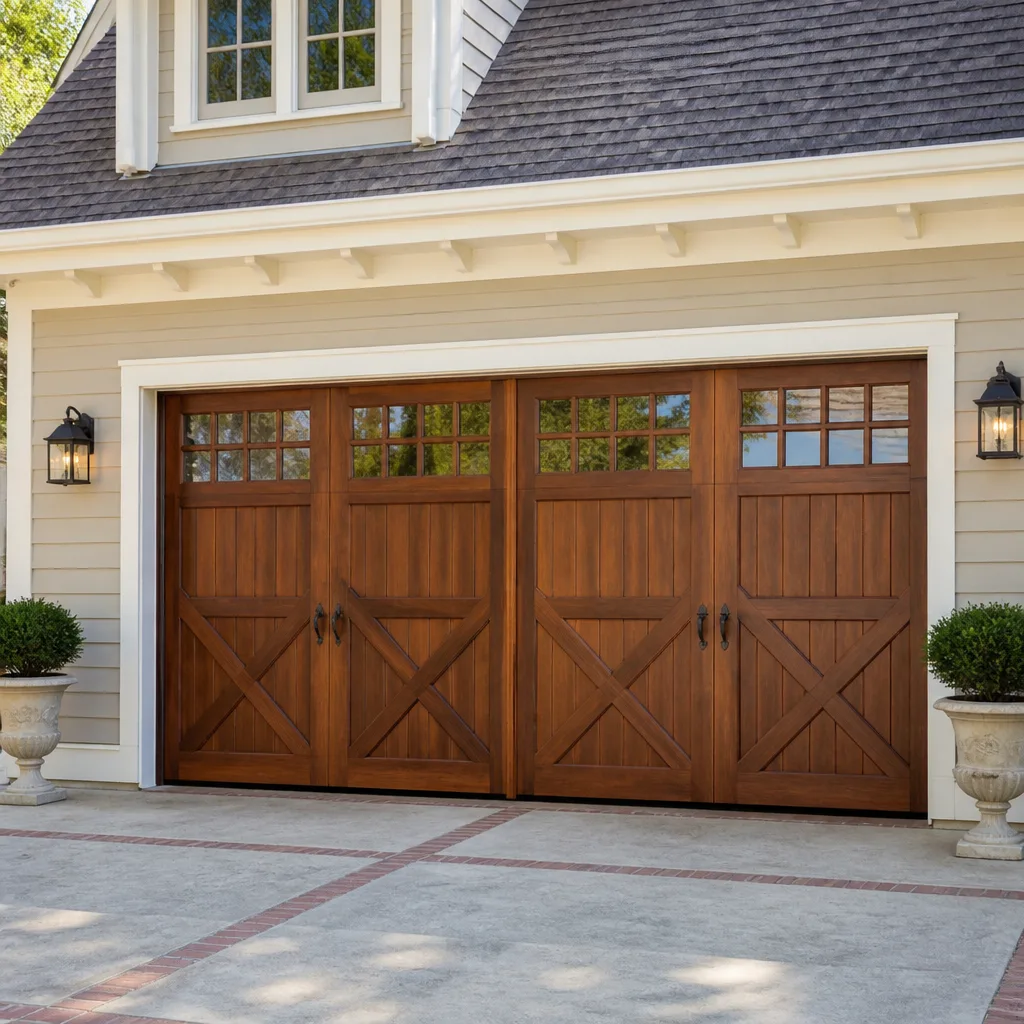 Carriage house
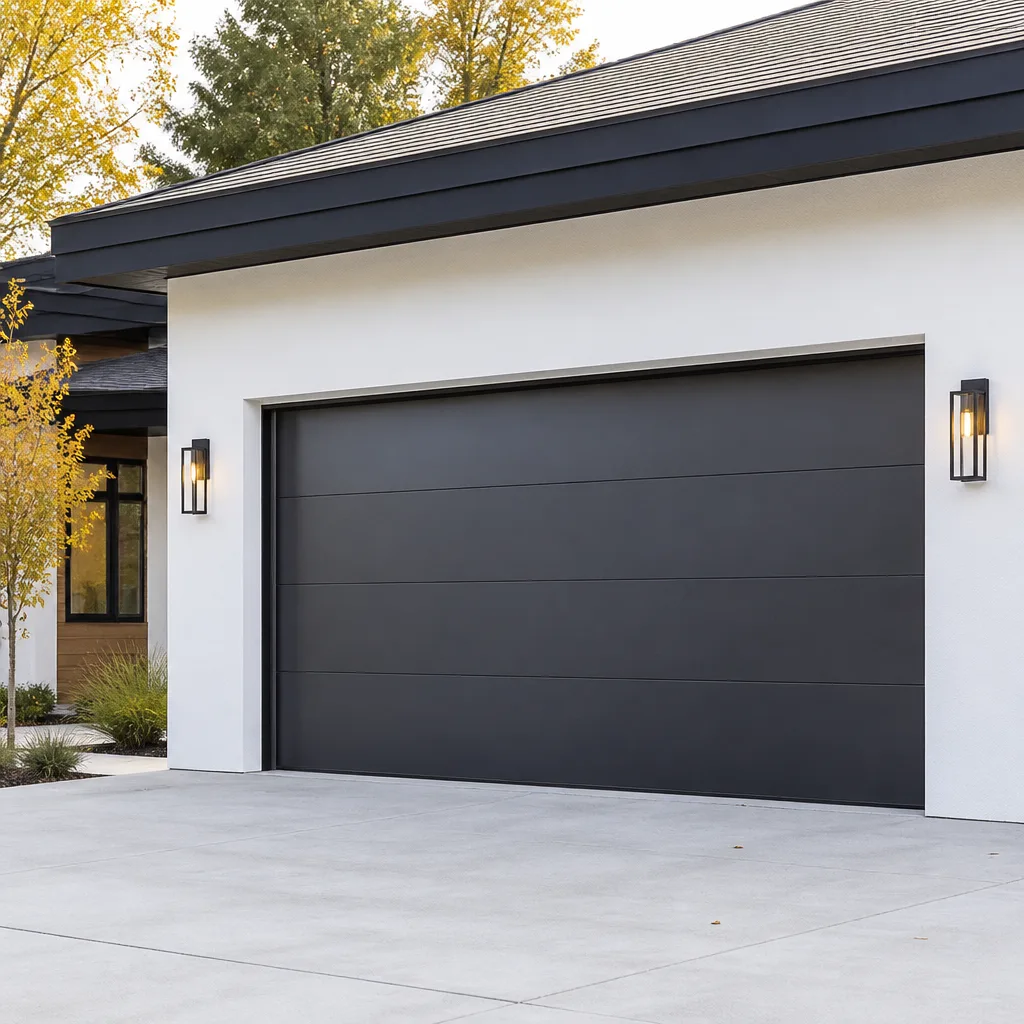 Modern flush
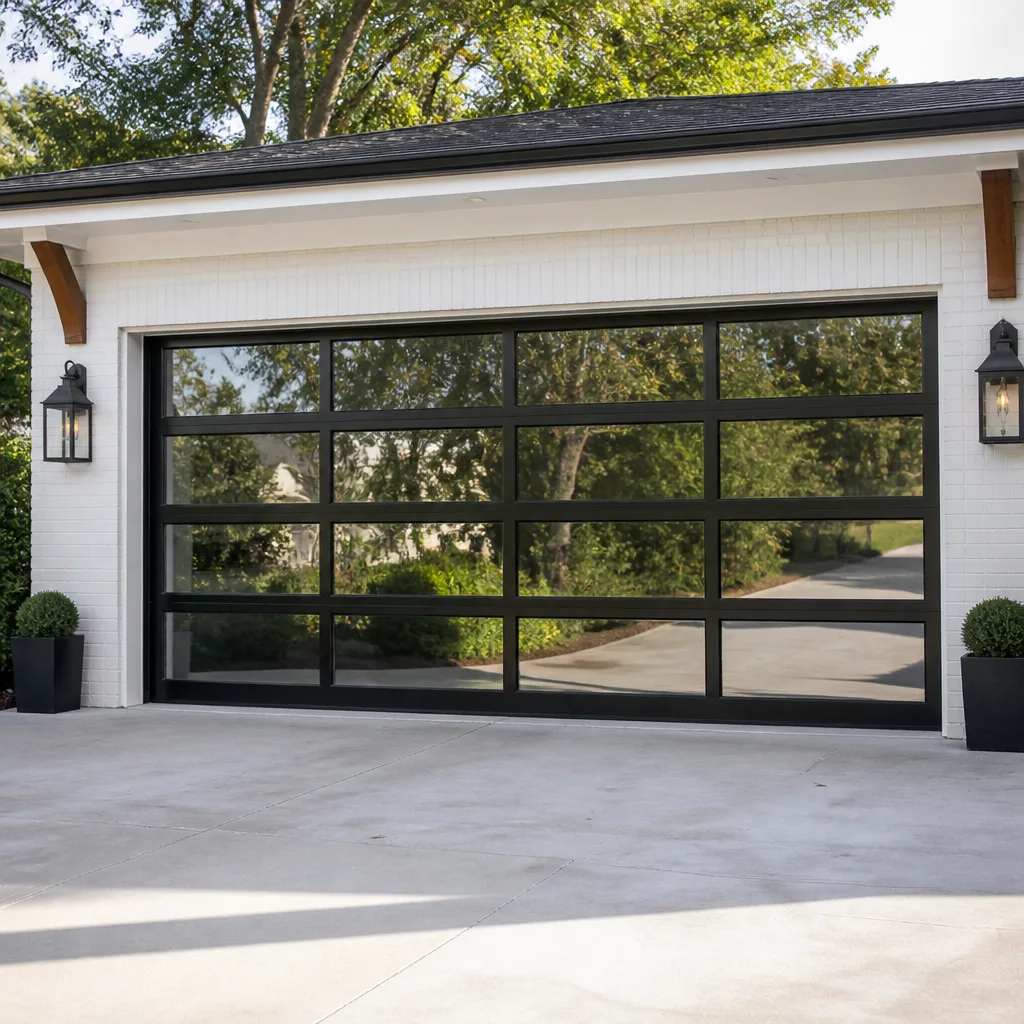 Full-view glass
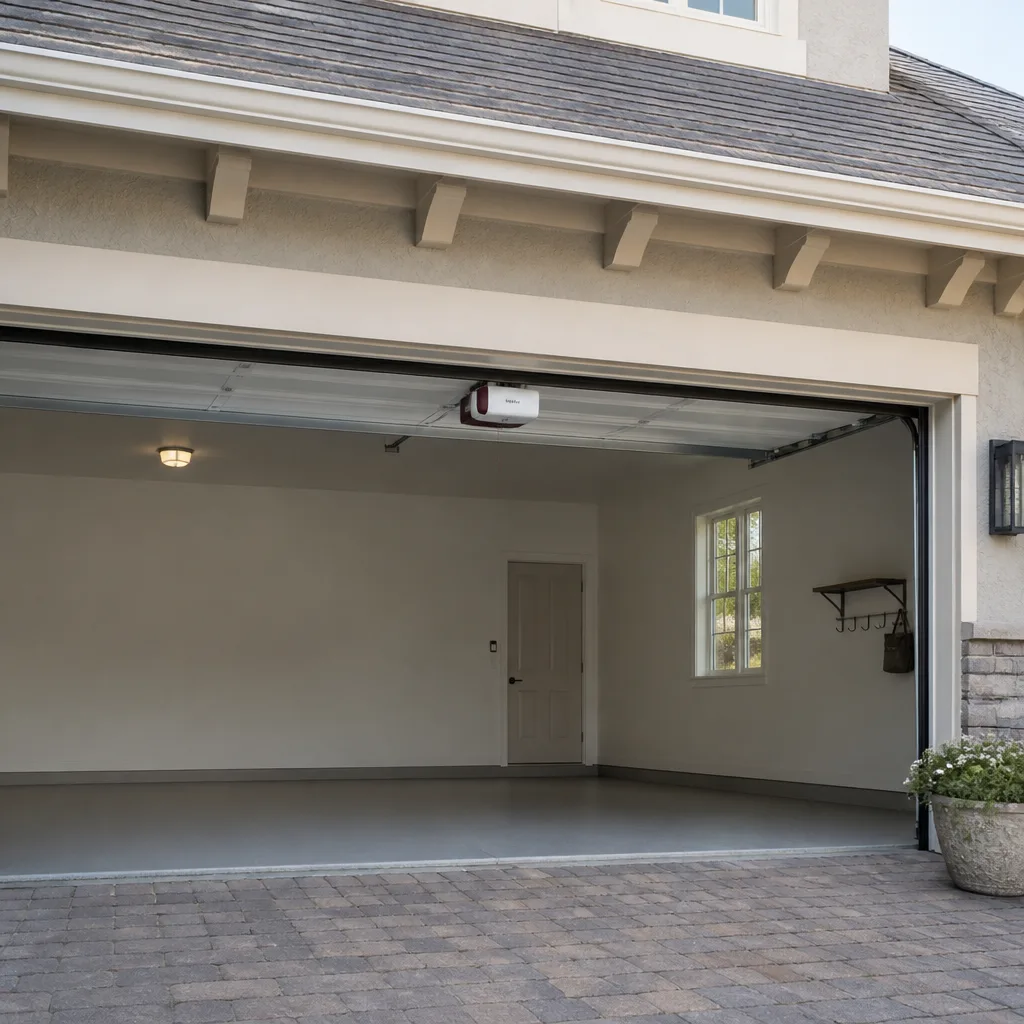 LiftMaster openers
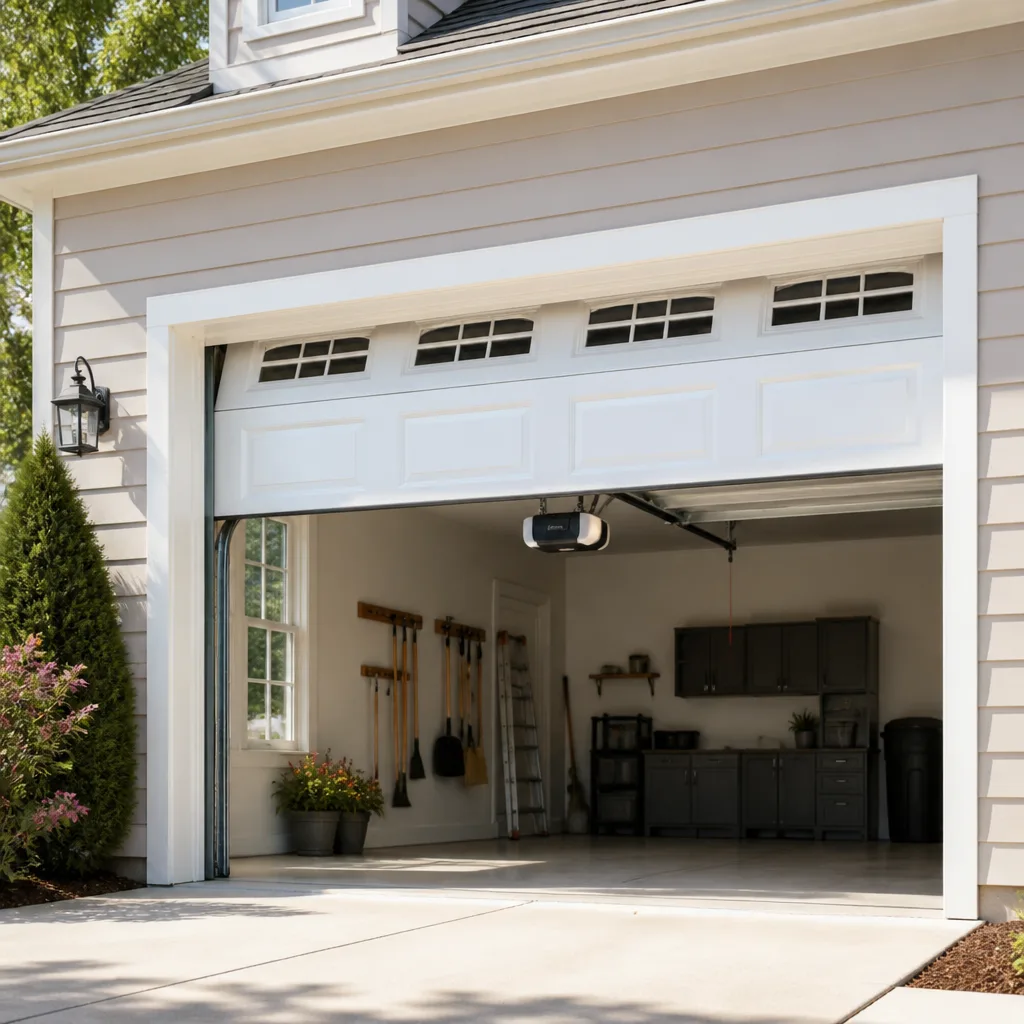 Chamberlain openers
Full 25-point door and opener safety check with every visit - springs, cables, rollers, tracks, and your LiftMaster or Chamberlain opener included
You get a price before we start. It does not change when the truck arrives.
Get your free estimateGarage Door Warning Signs: A Salinas Homeowner’s Reference Guide
A garage door that makes noise is not “just getting old.” That’s the most expensive piece of advice floating around Salinas garages, and we hear it every week. Specific sounds point to specific failing components, and knowing which sound means which problem can be the difference between a small adjustment and a much bigger repair once a door comes down hard. A grinding door is often telling you something completely different from a squealing one. A door that reverses on its own is usually signaling an opener issue, not a door issue.
This guide maps the warning signs we see most often in Salinas to what they actually mean, so you can decide what’s safe to watch and what needs attention today.
Quick Answer
Garage door warning signs in Salinas fall into four groups: strange sounds (grinding, squealing, popping, thumping), visible rust or wear on springs and cables, a door that drifts off its track, and opener behavior changes like hesitation or reversing. Sounds and track drift usually need prompt professional attention because they point to failing springs, cables, or rollers. Cosmetic rust and slow opener quirks can sometimes be monitored briefly, but any sign of a failing torsion spring or a door that’s come off its track should not be handled yourself.
Styles & brands we work with
- Raised-panel steel
- Carriage house
- Modern flush
- Full-view glass
- LiftMaster openers
- Chamberlain openers
Table of Contents
- Sound-to-Symptom Guide: What Each Noise Means
- Rust Patterns: Cosmetic vs. Spring Failure Warning
- Off-Track Early Warning Signs
- Opener Behavior Changes Mapped to Causes
- Monitor vs. Same-Day Attention
- Salinas Climate and Your Door’s Wear Pattern
- Door and Opener Brands We See Most
- Common Mistakes to Avoid
Sound-to-Symptom Guide: What Each Noise Means
Sound is usually the first and most reliable warning sign a garage door gives you. The trick is that different noises come from different parts of the door system, and knowing which is which tells you where the problem lives. Here’s how we translate the four most common sounds.
- Grinding: Usually metal-on-metal friction. On most doors this points to dry or worn rollers, a bent track section, or a torsion spring that’s beginning to bind. If grinding is new and consistent, the rollers and track are the first place to look.
- Squealing: High-pitched squealing typically comes from the rollers or the hinges and is often resolved with proper lubrication at the correct points. Squealing that returns quickly after lubricating can mean the rollers themselves are worn and need replacing.
- Popping: A sharp popping or snapping sound, especially when the door is opening or closing, is one of the more serious signs. It can point to a slipping cable or a spring that’s close to failing. Popping should prompt a call rather than a wait-and-see.
- Thumping: A heavy thump usually indicates a door that’s out of balance or a roller that’s jumped its track. A door that thumps is putting uneven stress on the opener and the springs, and that stress compounds over time.
The reason sound matters so much is that the same door can make any of these noises, and each one tells you something specific about which component is failing. If you can describe the sound and when you hear it, you’ve already done the hard diagnostic work. For a more detailed walkthrough of these symptoms, our garage door repair page covers what we check on each type of call.
Rust Patterns: Cosmetic vs. Spring Failure Warning
Rust on a garage door in Salinas is one of the most misunderstood warning signs because there are two very different kinds, and they mean very different things. Knowing which one you’re looking at saves you either unnecessary worry or an avoidable failure.
Cosmetic rust shows up on the painted steel panels of the door face itself. It’s surface-level, it doesn’t affect the door’s function, and it’s mostly a paint maintenance issue. This kind of rust can be cleaned and repainted, and it’s worth doing to keep it from spreading.
Structural rust on the torsion spring, the cables, or the hinges at the track is a different story. A torsion spring that shows pitting, flaking, or a dull orange crust is under constant tension, and rust weakens that spring’s ability to hold that tension safely. Cables that show rust near the drum or the bottom bracket can fray, and a frayed cable under load is genuinely dangerous.
Here’s the practical distinction:
- Look at the door panels first. If the rust is only there, it’s cosmetic for now.
- Look at the spring above the door or the spring running along the track, depending on your door’s design.
- Check the cables at the bottom brackets and near the drums.
- Any rust on the spring or cables means the door needs a professional inspection rather than a wait-and-see.
If you’re unsure which type you’re seeing, describe it over the phone: the location of the rust matters more than the color. When spring or cable rust is confirmed, we treat it as a same-day concern. Call (844) 482-7563 and we’ll help you sort out cosmetic from structural.
Off-Track Early Warning Signs
A door that comes completely off its track rarely does it without warning. In our experience, most off-track calls are preceded by days or weeks of subtle signs that got brushed off. Here’s what to watch for before a door derails.
- Rollers that look cocked in the track. If a roller is sitting at an angle rather than straight in the channel, the track or hinge is already misaligned.
- A door that pulls to one side as it rises. An uneven rise means the tracks aren’t holding the door square, and that imbalance gets worse with every cycle.
- A gap between the roller and the track edge. If you can see light between a roller and the track wall, the track has bent.
- Visible dents or bends in the vertical or horizontal track. Tracks bend from impact, from a car nudging them, or from the door’s own weight over time. A bent section will eventually let the roller slip out.
- A door that hangs unevenly at the top. If one side reaches the top before the other, the door is out of balance and the tracks are taking the load.
Any of these signs means the door should be checked by someone who can inspect the track alignment and adjustment. A door that’s off its track should never be operated, even once, because the weight distribution can shift unpredictably. If you see any of the five signs above, stop using the door and call (844) 482-7563 for a free estimate.
Opener Behavior Changes Mapped to Causes
Openers fail in patterns, and the pattern usually tells you what’s wrong before anything breaks. If your door is a Raynor, LiftMaster, Chamberlain, or Genie, the behavior changes below are the ones worth paying attention to. We work on all of these regularly, so we’ve seen how each system tends to behave when it’s heading for trouble.
- Hesitation at the start of a cycle: The opener pauses before lifting. That’s usually a sign of a door that’s out of balance or a worn gear inside the opener. A balanced door should lift smoothly from the first inch.
- Reversing for no reason: The door starts down and immediately reverses. That’s often a safety sensor issue (misaligned, dirty, or blocked), but it can also mean the opener’s force limits are set too high or the logic board is failing.
- Remote inconsistency: The remote works sometimes and not others. On older openers, that’s frequently a dying battery, a worn remote, or interference on the frequency. On newer WiFi-enabled LiftMaster and Chamberlain openers, it can also be a connectivity issue with the wall control or the app pairing.
- Door stops partway: The door stops mid-cycle and won’t continue. This can be a force setting, a travel limit, or a failing opener motor. On Genie openers, we often find the travel limits have drifted.
- Opener runs but door doesn’t move: The motor turns, the door doesn’t. That points to a broken gear or a stripped sprocket inside the opener, or a snapped spring on the door.
If you can describe your opener’s behavior, you’ve made diagnosis faster. For a proper assessment, our garage door opener repair team handles the mechanical side and the smart-home side of the same unit. Call (844) 482-7563 and tell us what your opener is doing; we’ll take it from there.
Monitor vs. Same-Day Attention
Not every warning sign is an emergency, and we think homeowners deserve a clear line between “watch this” and “call today.” Here’s how we draw it, with the reasoning behind each call.
Safe to monitor briefly:
- Surface rust on the door panels (cosmetic only, no function impact)
- A squeak that returns slowly after lubrication (usually rollers, wear is gradual)
- An opener remote that needs a fresh battery or a re-pairing
- Minor cosmetic dents in the door panel that don’t affect the track
Same-day attention:
- Any popping or snapping sound from the spring or cable area
- Any visible rust on the spring or cables
- A door that pulls to one side, hangs unevenly, or shows any of the off-track signs
- A door that reverses or stops mid-cycle consistently
- An opener that runs but doesn’t move the door
The reasoning is simple: the “monitor” list involves components that fail gradually, and the “same-day” list involves components under tension or load that can fail suddenly. A rusting spring or a door that’s off-track isn’t going to wait, and a door that’s come out of the track or lost its spring tension is a real hazard. When in doubt, call. We answer 24/7, and we’d rather talk through a symptom than have you wait on something that’s about to fail.
Salinas Climate and Your Door’s Wear Pattern
Garage doors in Salinas don’t live in the same conditions as doors in other parts of California, and the wear patterns we see reflect that. Salinas winters are mild, and we don’t see doors stressed by the freeze-and-thaw cycles that dominate inland and mountain markets. What we do see is the opposite kind of wear: a long, steady, even wear profile that can lull homeowners into thinking the door is fine because there’s no dramatic seasonal damage.
That even wear profile is why the warning signs in this guide matter more in Salinas, not less. A door that’s never seen a hard freeze rarely has the obvious “cracked this winter” story. Instead, the wear shows up slowly: a roller that’s been squeaking for months, a spring that’s been quietly losing tension, an opener that hesitates just a little more each month. In a milder climate, subtle signs are the only signs you’ll get for a long stretch.
Salinas homeowners also tend to use their garage doors more than they realize, because the climate lets them use the garage as a workspace or a daily entry point year-round. That extra daily use is fine for the door, but it means the components that wear on a cycle count – rollers, springs, opener gears – accumulate wear faster than the door’s age would suggest. A door that gets cycled a dozen times a day is working harder than one that’s used twice, and its warning signs will show up sooner. When we look at a door in Salinas, we’re thinking about cycle count as much as we’re thinking about the calendar.
Salinas is also a diverse housing market. Older homes near the downtown core often have original doors with opener systems that are a decade or more old, while newer neighborhoods on the edges of town tend to have LiftMaster or Chamberlain openers installed as part of the build. Both are worth inspecting on the same schedule; the difference is which components are most likely to show wear first. For a broader look at what we handle across the city, see our main Fletcher Garage Door Repair page.
Door and Opener Brands We See Most
The brands on your door and opener change what a warning sign looks like, and it’s worth knowing how we read each one. We work on eight of the most widely installed residential brands, which means we usually arrive already familiar with the equipment on your door.
LiftMaster and Chamberlain openers are the most common we see in Salinas, and they’ve added complexity over the years. WiFi connectivity, battery backup, and camera integration all mean more components that can misbehave before the motor does. When a LiftMaster or Chamberlain opener acts up, the factory behavior patterns are specific enough that we can often trace the cause from the symptom.
Genie openers have their own behavior patterns, particularly around travel limits and force settings, and we see those quirks regularly. Raynor doors and the door brands Clopay, Amarr, and Wayne Dalton each have their own spring, roller, and hinge configurations, and those configurations determine which wear points to inspect first. Craftsman openers, common on older Salinas homes, have their own diagnostic patterns as well.
Knowing the brand matters because generic “needs service” advice isn’t much help to a homeowner. A specific brand lets you ask a specific question: “My Genie opener stops partway – is that a travel limit or a motor problem?” That’s the kind of question we can answer over the phone. If you know your brand and your symptom, call (844) 482-7563 and we’ll talk it through.
Common Mistakes to Avoid
- Assuming a new sound is “just getting old.” Sound is a diagnostic signal, not a symptom of age. A door that’s been quiet for years and suddenly grinds is telling you something specific is failing, and waiting for it to get quieter never works.
- Lubricating a spring that’s showing rust. Greasing a rusted torsion spring doesn’t fix the rust, and it hides the visual sign you need to see during your next inspection. Rusty springs need a professional check, not a lubricant.
- Forcing a door that’s off-track back into the track. A door that’s slipped its track is under uneven load, and forcing it back can shift that load onto a cable or a panel. This is the single most common way a minor adjustment turns into a bigger repair.
- Replacing an opener when the door is the problem. A door that’s out of balance puts extra strain on the opener, and a new opener won’t fix a balance issue. Diagnose the door first.
- Adjusting the opener’s force settings to make the door “work.” Raising the force limit masks the underlying issue and removes the safety margin that protects the door. It’s a workaround, not a fix.
- Ignoring cosmetic rust until it spreads to the spring. Cosmetic rust on the panels is a paint maintenance issue, but if it’s not addressed it can migrate to the tracks and hinges over time.
- Treating a single hesitation as a one-time event. A door that hesitates once has often been hesitating subtly for weeks. If it happens more than once, it’s worth a call.
See the difference
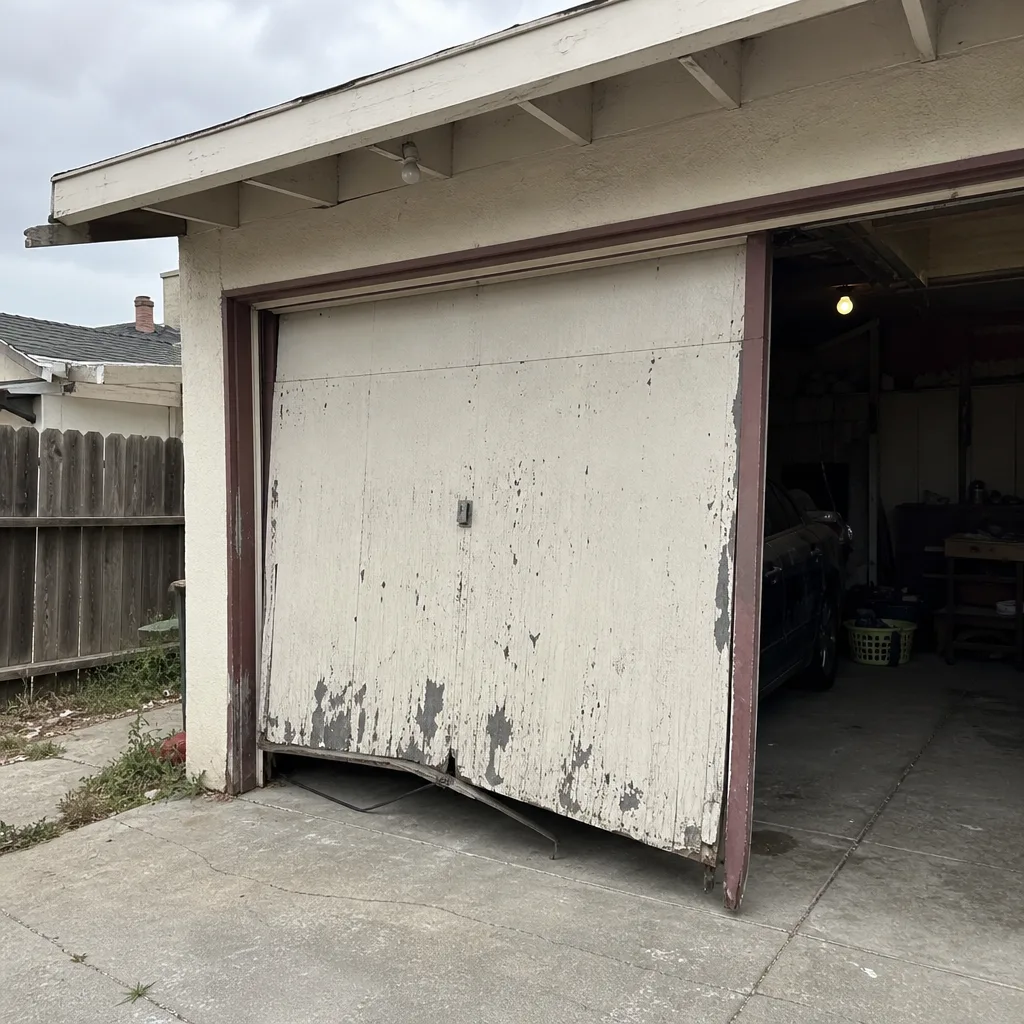 Before
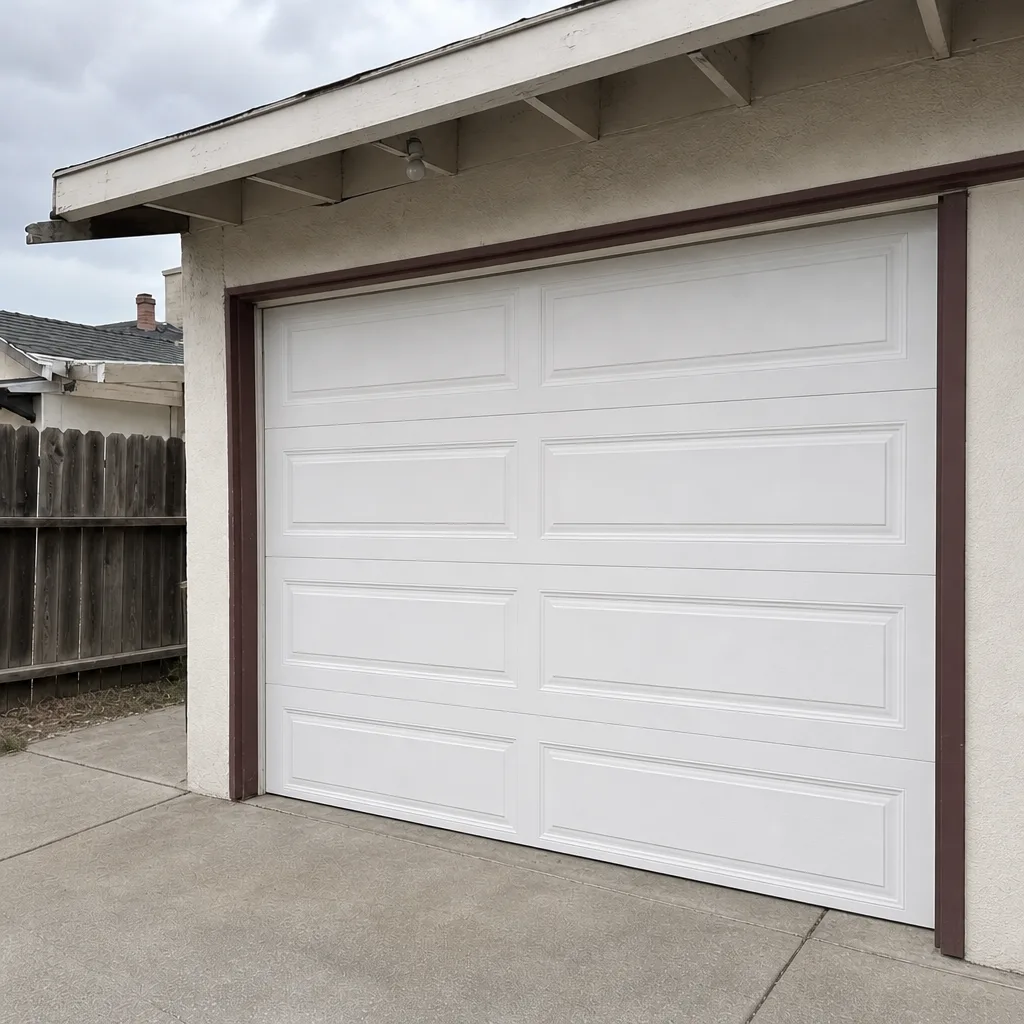 After
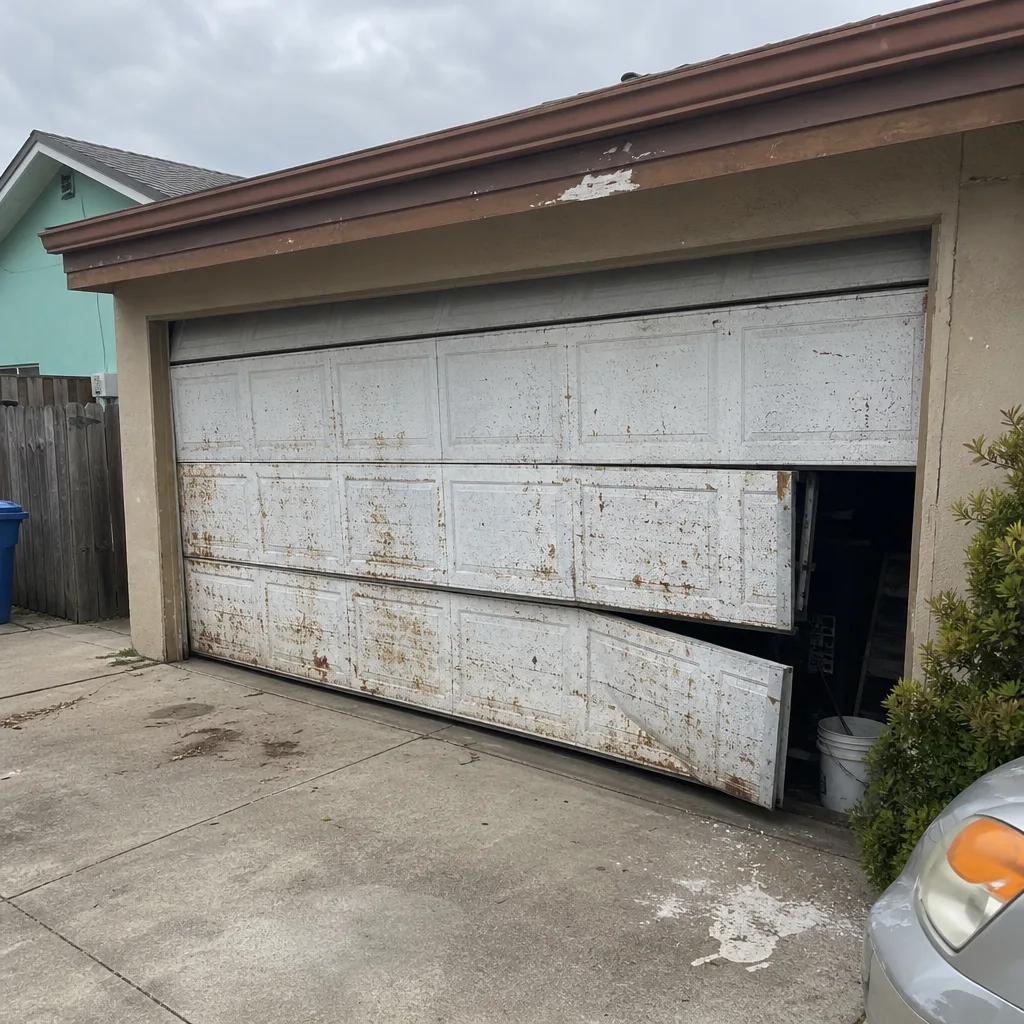 Before
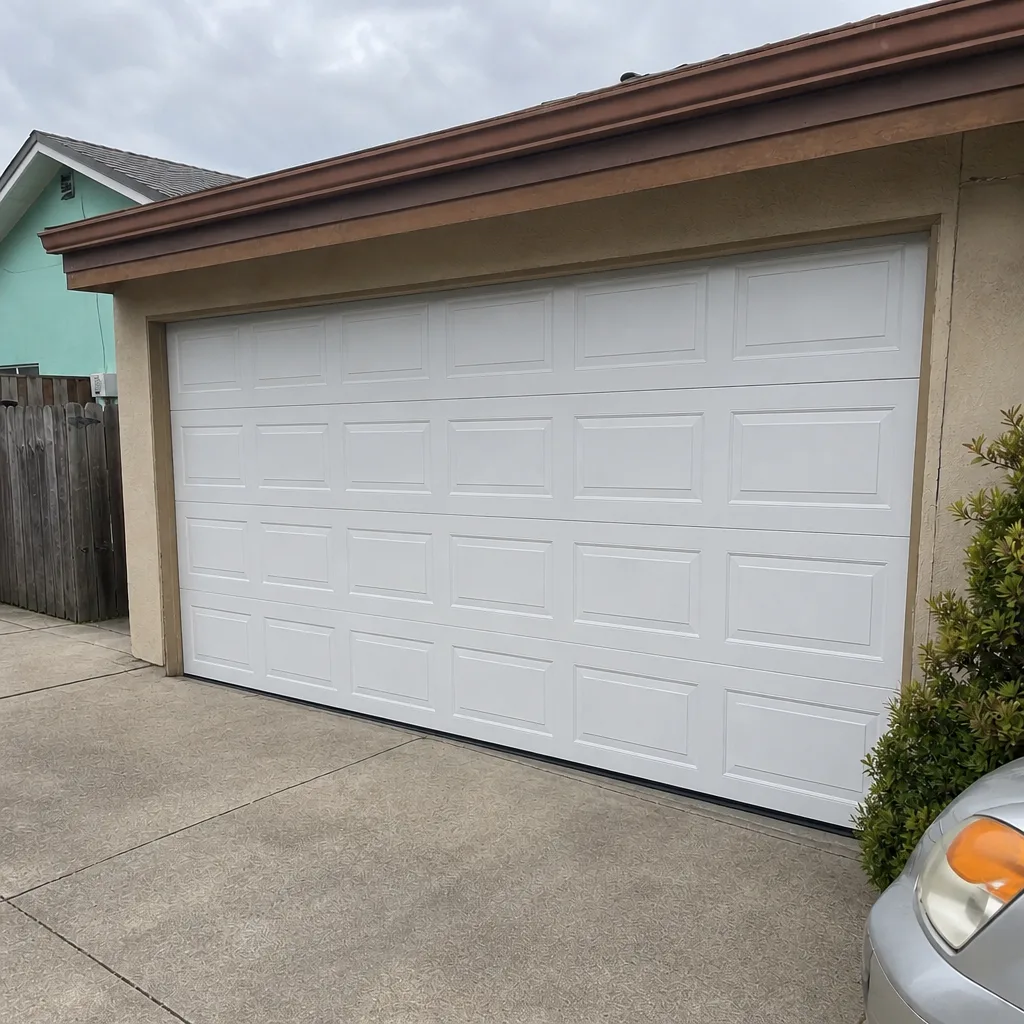 After
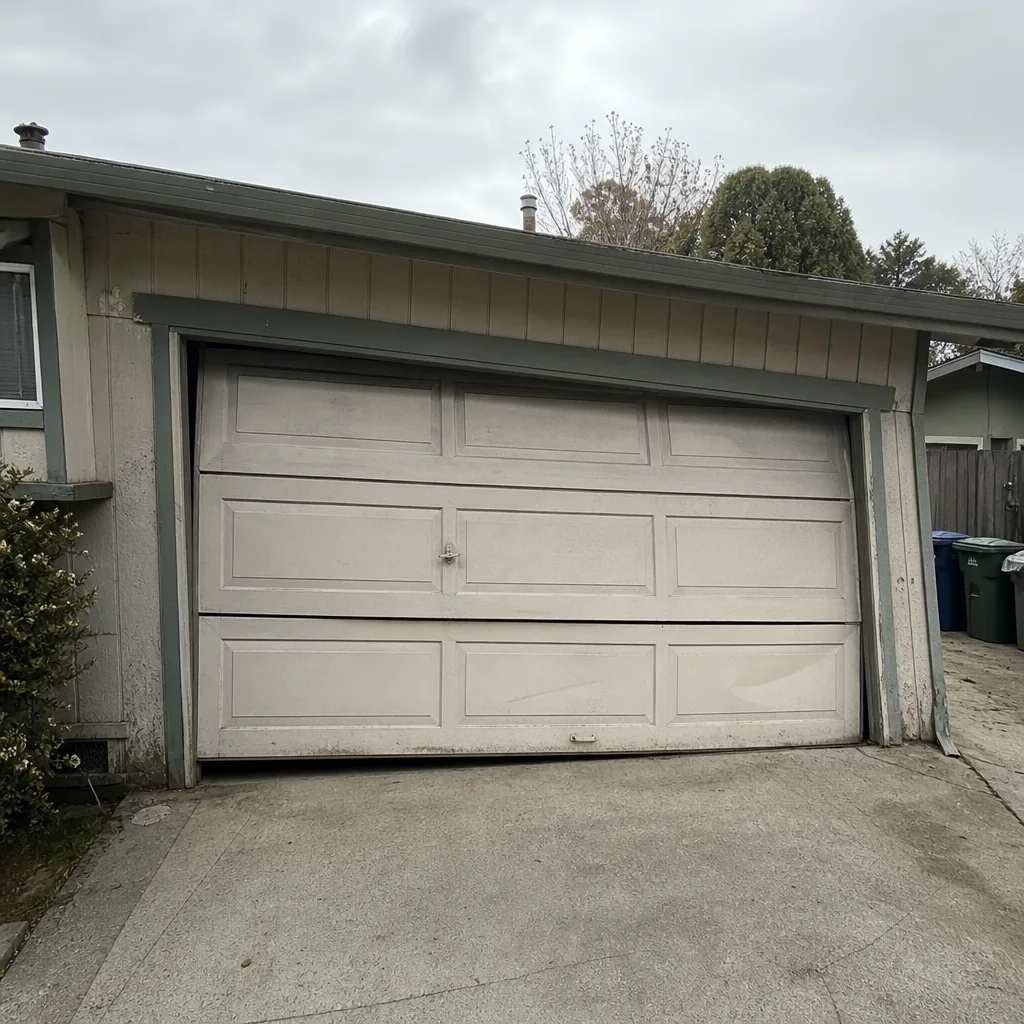 Before
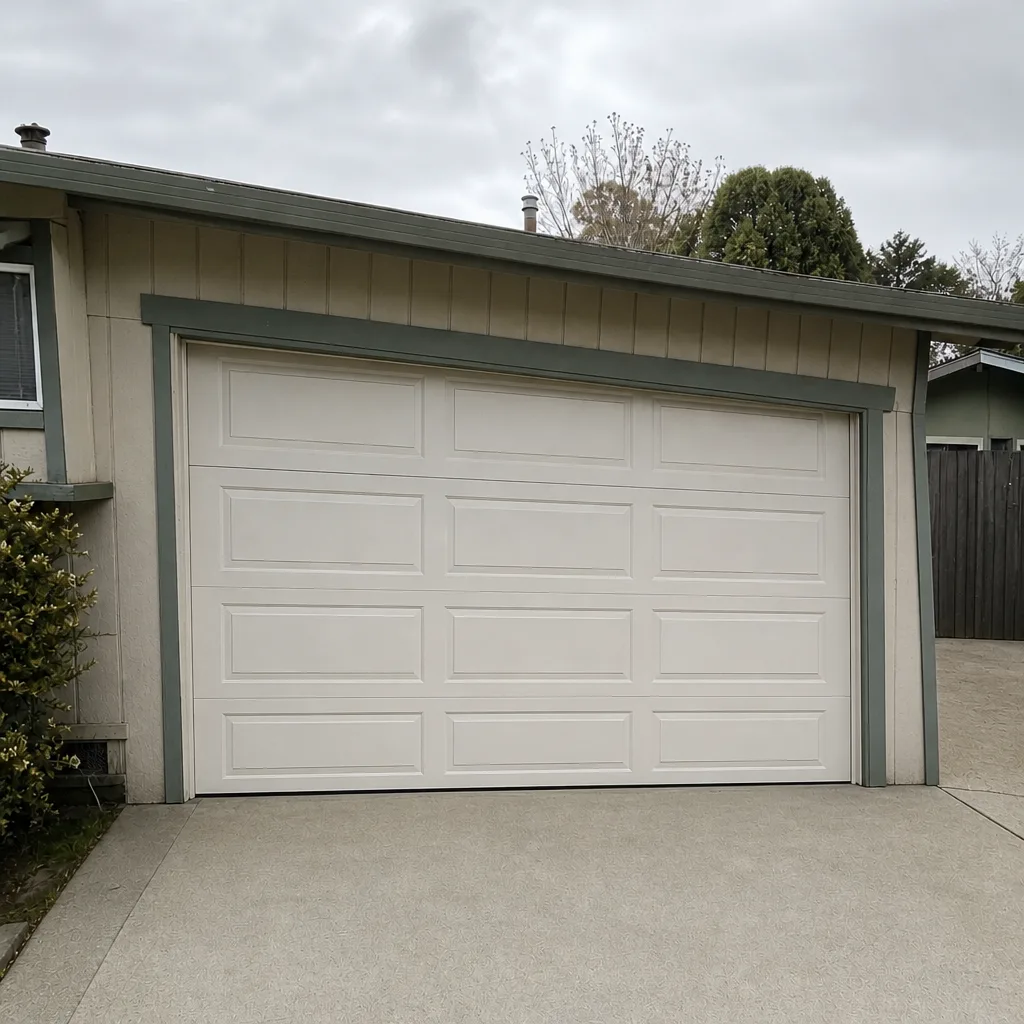 After
When to Call a Professional
Some garage door problems are safe to watch and some are safe to fix yourself, but the components under tension or load are not. Call a professional if you hear popping or snapping from the spring area, see rust on the spring or cables, notice a door that hangs unevenly or pulls to one side, or see any of the off-track signs covered above. Call if your opener runs but the door doesn’t move, if the door reverses consistently, or if a remote has stopped working after a battery change.
Fletcher Garage Door Repair offers free estimates in Salinas – call (844) 482-7563. We answer 24/7. Fast dispatch from 7am to 7pm, Sunday through Friday, and the price is quoted and agreed before any work starts. We work on the brands on your door and opener, whether that’s a LiftMaster, a Genie, a Raynor, or a Chamberlain.
Frequently Asked Questions
Grinding and squealing are the most common signs we see in Salinas, and both usually trace back to rollers or hinges rather than the door itself. A grinding door often means worn or dry rollers, while a squealing door usually points to hinges that need lubrication or replacement. Either one is worth a call because both put extra stress on the opener and springs over time. Call (844) 482-7563 for a free estimate.
No. Rust on the door panels is almost always cosmetic, while rust on the torsion spring or cables is the serious kind. Panel rust is a paint maintenance issue, and it can be cleaned and repainted. Spring or cable rust means the component is losing strength under tension and should be inspected by a professional. If you’re not sure which type you have, describe the location to us; the rust’s location matters more than its color.
No, a door that’s off its track should never be operated or forced back into place yourself. The door’s weight is unevenly distributed once it’s out of the track, and forcing it can cause the track, rollers, or cables to fail further or create an injury risk. Stop using the door and call a professional. Call (844) 482-7563 and we’ll assess the track and door safely.
A single hesitation is usually safe to watch for a short time, but a repeated hesitation needs prompt attention. Hesitation often points to a door that’s out of balance or a worn gear inside the opener, and both get worse with continued use. Repeated hesitation puts extra strain on the opener and the door, and the repair tends to grow the longer it waits. Call (844) 482-7563 for a free estimate.
A door that reverses before it closes is often a safety sensor issue rather than a door problem, but it can also be a force limit setting or a failing logic board. The safety sensors are the first thing to check: misaligned, dirty, or blocked sensors are the most common cause. If the sensors look clean and aligned, the opener itself usually needs professional attention. Call (844) 482-7563 and describe what your opener is doing.
Yes. Each brand has its own behavior patterns, and the brand on your door and opener tells us which components to check first. Genie openers, for example, tend to signal travel limit problems differently than LiftMaster or Chamberlain openers do, and door brands like Clopay, Amarr, Wayne Dalton, and Raynor each have their own spring and roller configurations. If you know the brand and the symptom, we can often narrow down the cause before we arrive. Call (844) 482-7563.
The Bottom Line
Garage door failures in Salinas rarely happen without warning. They happen because the warning was misread as age, ignored, or attributed to something less serious. The four sound types – grinding, squealing, popping, and thumping – map to specific components, and the difference between cosmetic rust on the panels and structural rust on the spring is the difference between a paint job and a same-day call. Off-track signs show up days before a derailment, opener hesitation and reversing trace back to specific causes, and in Salinas’s mild climate, subtle signs are often the only signs you’ll get. Watch the small things, but call on the serious ones. When you’re not sure, we’re one call away.
Written by the team at Fletcher Garage Door Repair, serving Salinas since 2015.